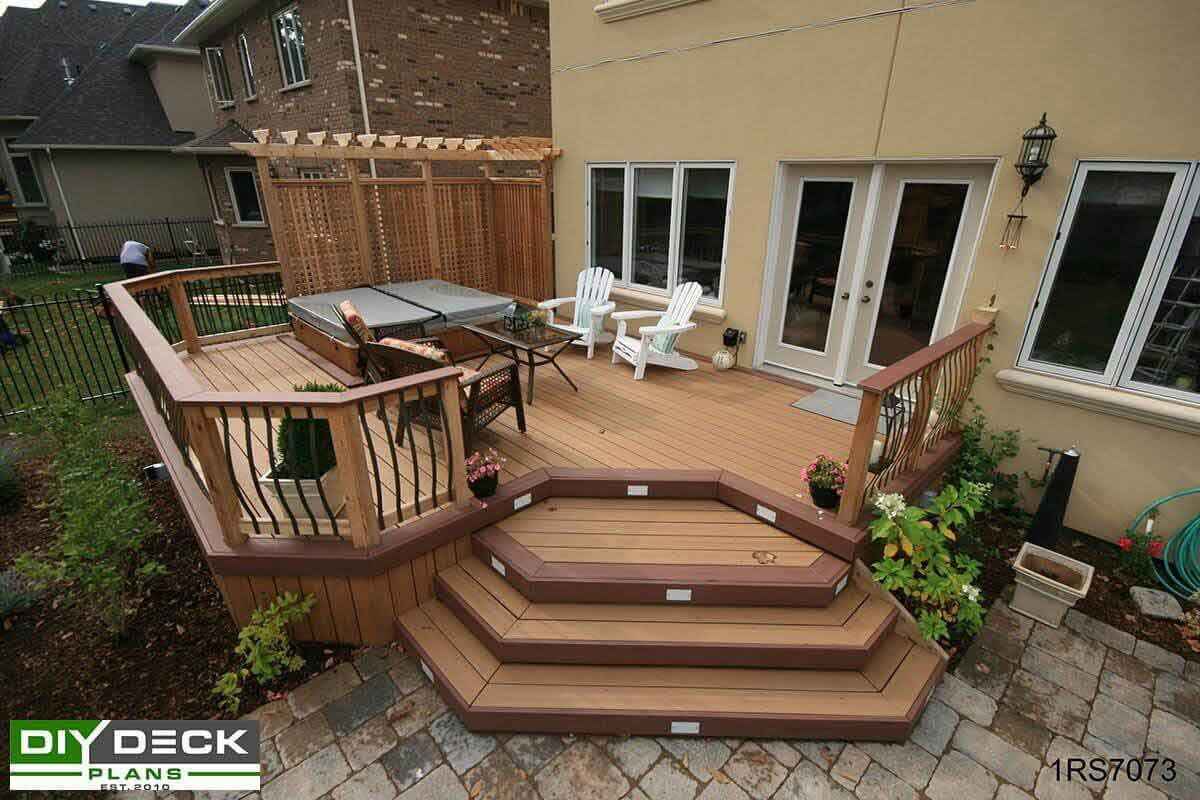
Wood vs. Composite Decking for a Florida Pool Deck: Which One Actually Holds Up
Start Your Transformation
A straight comparison for Florida homeowners building a deck around an above-ground pool — from the barrier island to inland Central Florida.
Quick Answer: For most Florida above-ground pool decks, pressure-treated wood costs less up front and composite costs less to own — the crossover usually lands somewhere in year seven or eight, depending on how religiously you re-seal. Wood wins on price, feel underfoot, and staying cool in direct sun; composite wins on maintenance, fade resistance, and shrugging off mildew in shade. Either way the deck runs $5,000–$10,000 on top of the pool, and the framing underneath matters more than the boards on top.
In This Article
- The Real Question Isn't Wood or Composite
- Pressure-Treated Wood in Florida: The Rating and the Clock
- Composite in Florida: Capped Boards, Fade, and the Two Warranties
- Heat Underfoot — the One That Decides It for Families
- The Framing Underneath Is the Same Either Way
- Ten Years Out: What Each One Really Costs You
- How to Pick, by Situation
- FAQs
Florida licensed & insured
Permits pulled, inspections set
In-house decking crew
Real footings, sized framing
By the Right Way Enclosures team — Florida-licensed pool contractor (CPC1461491) and screen-enclosure specialty contractor (SCC131153510 / SCC131153892), serving Central and Eastern Coastal Florida. Last updated: 2026-09-07.
The Real Question Isn't Wood or Composite
Almost everybody walks into this decision asking which material is better. That's the wrong question, because both of them work fine in Florida when they're installed right.
The right question is how much upkeep you're actually going to do. Not how much you plan to do in the showroom — how much you'll really do in year four, when the pool is old news and the weekend is short.
Wood is a material with a chore attached. Composite is a material with a bill attached. Pick the one whose downside you can live with:
- Wood costs less on day one and asks for a cleaning and re-seal on a schedule, forever.
- Composite costs more on day one and asks for a wash and not much else.
- Both need the same footings, the same framing, and the same permit.
- Neither is maintenance-free, and anybody telling you composite is has never had one under an oak.
We build in both. We don't have a horse in this race — we have a crew that has to come back and look at the thing in five years.
Pressure-Treated Wood in Florida: The Rating and the Clock
Pressure-treated southern yellow pine is the default for a reason. It's the least expensive way to get a real, framed, code-compliant deck around a pool, and on day one it looks terrific.
The thing that matters most on a wood deck isn't the brand — it's the treatment rating . Lumber comes rated for above-ground use or for ground contact, and around a pool in Florida you want ground-contact-rated material anywhere near the dirt, the splash zone, or a spot that stays damp.
Here's what wood actually does here over time:
- It grays. UV breaks down the surface fibers. That's cosmetic, and a wash-and-seal brings it back.
- It checks and cups. Sun on one face and moisture on the other pulls boards. Proper gapping and fastening controls it.
- It absorbs pool water. Splash-out is constantly wetting the same three feet of deck, so that band ages fastest.
- It needs a schedule. Most Florida pool decks want a clean-and-seal every one to two years, and the barrier island end of that range is the short one.
Salt air is the accelerant. A deck four miles inland and the same deck a block off the Atlantic are not on the same clock — the ocean-side one gets re-sealed more often, and the hardware and detailing get specced tighter from the start.
Not sure which one fits your yard, your budget, and how you actually use the pool? Call (772) 758-5372 and we'll come measure, walk the slope, and lay out both options with real numbers before you commit to anything.
Composite in Florida: Capped Boards, Fade, and the Two Warranties
Composite decking is wood flour and plastic pressed into a board. The distinction that matters is whether the board is capped — wrapped in a hard polymer shell on the faces and edges — or uncapped.
Capped boards are what you want in Florida. The shell is what resists staining, mildew, and fading. Uncapped composite is older technology and it will pick up mildew in a shaded, damp spot the same way wood does.
What composite gets you here:
- No sealing, ever. Wash it. That's the maintenance program.
- Stain resistance that matters when sunscreen, bug spray, and dropped hot dogs are in play.
- Mildew resistance in the shaded, north-facing part of a deck under a live oak — the exact spot wood struggles.
- No splinters, which parents of small kids notice immediately.
Now the honest part. Composite carries two different warranties, and they are not the same length — a long structural warranty and a shorter, separate fade-and-stain warranty. Read the second one. That's the one that covers the thing you'll actually notice.
Composite also moves more than wood does with temperature. Boards need end gaps set per the manufacturer's instructions, and that's an installation detail, not a product flaw — get it wrong on a 30-foot run in August and you'll see it by January.
Heat Underfoot — the One That Decides It for Families
This is the argument that ends most wood-versus-composite conversations in Florida, and it doesn't go the way the brochures suggest.
Dark composite gets hot. Hotter than light-colored wood in the same sun, on the same afternoon. If your deck faces west with no shade and your kids are barefoot from June to September, that's a real consideration, not a technicality.
Ways to deal with it if you want composite anyway:
- Pick a lighter board. Color drives surface temperature more than brand does.
- Shade the west side with the pool's own footprint, a pergola, or existing canopy.
- Keep the traffic path shaded — the walk from the door to the stairs is where feet spend time.
- Look at where you actually live on the deck. A lounging deck in full sun is a different problem than a landing and stairs.
Wood runs cooler, and that's a genuine point in its column. It's also why plenty of families with a wide-open, unshaded yard end up on pressure-treated even when the budget would stretch.
The Framing Underneath Is the Same Either Way
Here's the part nobody shops for, and it's the part that decides whether your deck is still solid in ten years.
Both materials sit on the same structure: real footings set to the grade, posts properly set, joists sized for the span, and boards height-matched to the pool's top rail so the step out isn't awkward. A deck floating on patio blocks is not a deck, whatever you screw to the top of it.
Composite actually asks more of the frame than wood does. It's less rigid across a span, so joist spacing usually tightens up — which means the "just swap in composite boards" idea doesn't work on a frame that wasn't built for it.
The structural items that don't care what you picked:
- Footings and post setting — this is the whole ballgame for longevity.
- Joist spacing sized for the decking you actually chose, not the one you almost chose.
- Fasteners rated for treated lumber, because modern treatment chemistry eats the wrong ones.
- Rails, stairs, and a self-closing gate where code and your kids require them.
- The barrier rule. A deck can change how Florida's Residential Swimming Pool Safety Act (Statute 515) applies to your pool, because the pool wall stops being the climbing obstacle. Our Volusia County deck and barrier guide walks that one all the way through.
Our own decking crew does this work — not a subcontractor we found last week — and a pool deck typically adds one to two weeks on top of the pool build once permits are approved.
You don't have to guess which one is right. Tell us your lot, your shade, and your tolerance for a Saturday with a sprayer, and we'll tell you straight which material we'd put on your yard. Call (772) 758-5372.
Ten Years Out: What Each One Really Costs You
A deck around an above-ground pool runs $5,000–$10,000 on top of the pool itself. Where you land inside that range depends on square footage, deck height, whether it's a full wrap or a landing and stairs, how much rail and stair work is involved, and which boards go down.
Composite starts at the higher end of that range. Wood starts lower. Then the clock starts.
- Up-front cost. Wood lower, composite higher.
- Ongoing work. Wood: clean and seal every one to two years. Composite: wash as needed.
- Ongoing cost. Wood: materials plus a weekend, repeatedly. Composite: effectively none.
- Florida sun. Wood grays without sealing but runs cooler underfoot. Composite holds color, and dark boards run hot.
- Shade and damp. Wood mildews without upkeep. Capped composite resists it.
- Feel. Wood is natural and slightly softer. Composite is uniform, with no splinters.
Run that out ten years and the gap closes. If you seal on schedule, wood's total cost catches up to composite somewhere around year seven or eight. If you don't seal on schedule, wood loses — not on money, on how the deck looks and how long the boards last.
📌 The Five Questions That Settle It
- How much sun does the deck get, and is anybody barefoot on it at 2 p.m.?
- Will you honestly clean and seal it every year or two?
- Is any part of it shaded and slow to dry?
- How close are you to salt air?
- Is this the forever house, or are you selling in five years?
How to Pick, by Situation
Skip the spec sheets. Find yourself on this list:
- Tight budget, want the deck now instead of in three years. Wood. A deck you build today beats a composite deck you keep postponing.
- Full-sun yard, barefoot kids all summer. Wood, or a light-colored composite. Don't put a dark board in an unshaded west-facing yard.
- Shaded lot under mature oaks. Capped composite. That's the environment where wood's maintenance clock speeds up the most.
- Barrier-island or near-lagoon home. Either works, but budget the shorter re-seal interval honestly if you go wood.
- Forever house, and you hate yard chores. Composite. You're buying the next fifteen weekends back.
- Selling in a few years. Wood, sealed and sharp. Buyers price the deck they see, not the maintenance schedule they inherit.
If you're leaning toward a ground-level surround instead of a raised deck, that's a different build entirely — pavers, travertine, or a knockdown cool-deck finish laid by our in-house licensed mason. Those pair with in-ground pools; raised wood and composite decks pair with above-ground. Our pool deck finish comparison covers that side of it.
Full details on how we build — full-wrap decks, partial and entry decks, and pool-and-enclosure packages — live on our wood deck installation page.
One Team, One Timeline — From the Pool to the Boards
The families who end up happiest with their deck are the ones who decided the material before the pool went in, not after. Deck height, stair placement, and pump access all get easier when the pool crew and the deck crew are the same crew working off one plan.
Right Way sets the resin-coated, saltwater-ready above-ground pool — from delivery to first swim in under 7 days — and our own decking crew builds the deck behind it in one to two weeks once permits clear. Two clocks, one contract, one phone number when you have a question.
Call (772) 758-5372 or schedule a consultation at rightwayenclosures.com. One team. One design. One timeline.
FAQs
Does composite decking get too hot to walk on barefoot in Florida?
Dark composite boards do get hot in direct Florida sun — noticeably hotter than light-colored pressure-treated wood on the same afternoon. Board color drives surface temperature more than brand does, so a light composite in a shaded yard is fine. We steer full-sun, barefoot-kid yards toward lighter boards or wood.
How often does a wood pool deck need to be re-sealed in Florida?
Every one to two years for most Florida pool decks, and closer to every year if you're near the Atlantic or the Indian River Lagoon. Salt air and UV both attack the surface, and the splash zone around an above-ground pool stays wet longest. We seal new decks about 30 days after installation to start the clock right.
Does composite decking fade in the Florida sun?
Capped composite resists fading well, but no board is completely fade-proof after a decade of Florida UV. The important detail is that composite carries two separate warranties — a long structural one and a shorter fade-and-stain one. Read the fade term before you buy, because that's the coverage you'll actually use.
Can I put composite boards on an existing wood deck frame?
Usually not without changes. Composite is less rigid across a span than wood, so it typically needs tighter joist spacing than a frame built for pressure-treated boards. We check the existing framing, footings, and span before quoting a board swap — decking over an undersized frame is how a deck gets bouncy.
Related services: Above-Ground Pools · Wood Deck Installation · Pool Screen Enclosures