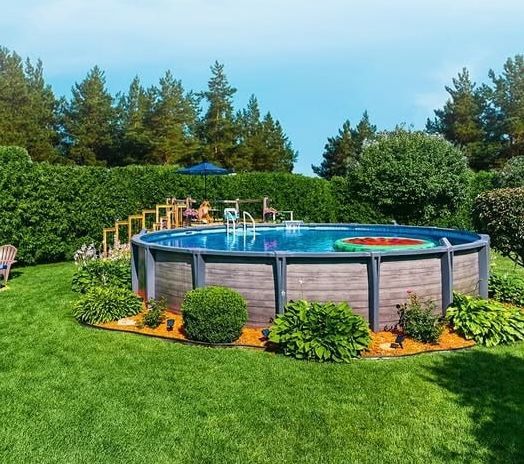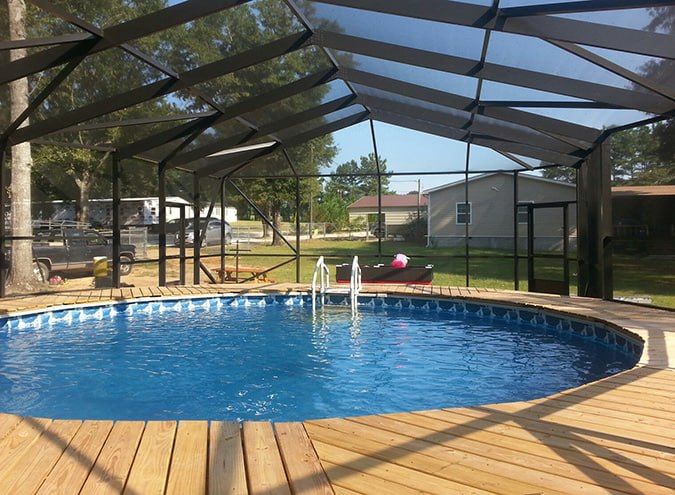
Wood Pool Deck Upkeep in Sebastian Salt Air: Sealing, Rot, and Real Lifespan
Start Your Transformation
What actually wears out on a wood deck around an above-ground pool in Sebastian — and the yearly routine that keeps it solid, from Indian River Drive to the Sebastian Highlands.
Quick Answer: A pressure-treated wood pool deck in Sebastian lasts as long as its frame stays dry and its fasteners stay intact — rot starts underneath, at post bases, joist tops, and cut ends, not on the boards you walk on. Rinse the salt off, re-seal when water stops beading, and walk the frame once a year with a screwdriver. The boards wear out first; a frame kept dry can outlast more than one set of them.
In This Article
- Why Sebastian Is Hard on a Wood Deck
- Rot Starts Underneath, Not on Top
- Salt Air and the Metal Holding It Together
- The Upkeep Routine That Actually Works
- Real Lifespan: What Wears Out First
- Repair, Re-Board, or Rebuild
- FAQs
Florida licensed & insured
City of Sebastian permit-pulling
In-house decking crew
Real footings, framing to span
By the Right Way Enclosures team — Florida-licensed pool contractor (CPC1461491) and screen-enclosure specialty contractor (SCC131153510 / SCC131153892), serving Central and Eastern Coastal Florida. Last updated: 2026-09-11.
Why Sebastian Is Hard on a Wood Deck
Sebastian sits right on the Indian River Lagoon, a few miles from where the Sebastian Inlet lets the Atlantic in. Great for fishing. Rough on anything made of wood and held together with steel.
A wood deck here takes four hits at once:
- Salt in the air. Onshore breezes carry it across the lagoon onto every board, rail, and screw head.
- Sun. UV breaks down the surface fibers and bakes the sealer off the south- and west-facing boards first.
- Water that won't quit. Summer afternoon storms, heavy dew, and pool splash keep the same spots wet for days.
- Your own pool. If you run a saltwater system — and we recommend one — every splash leaves a little salt on the boards.
A deck on Indian River Drive and one back in the Sebastian Highlands fight the same enemies at different strengths. The closer you are to the water, the tighter the routine needs to be.
Still choosing boards? Start with our wood vs. composite comparison. This guide is for the wood deck you've already got.
Rot Starts Underneath, Not on Top
Most homeowners judge a deck by its boards. That's backwards — board tops get sun and air, so they dry out between storms.
Decay fungi need moisture. The USDA Forest Products Laboratory's Wood Handbook treats about 20 percent moisture content as the margin of safety: wood kept drier than that is out of reach of rot. On a pool deck, these are the spots that never get that dry:
- Post bases. Water sits where a post meets the footing and wicks up the end grain.
- Joist tops. Rain runs through the board gaps and parks on the joists, right under the screws.
- Cut ends. Treatment doesn't reach the core of thick lumber, so the AWPA M4 care standard calls for brushing an end-cut preservative on every saw cut.
- Stair stringers. They sit low, catch runoff, and live in shade.
- The splash band. The strip nearest the pool's top rail gets soaked all summer and dries last.
Lumber rating matters too. Treated wood is sold for above-ground or ground-contact use, and the ground-contact grade belongs anywhere near the dirt or slow to dry.
The test takes a flat screwdriver. Sound wood resists and splinters in long fibers; rotten wood lets the tip sink in and crumbles.
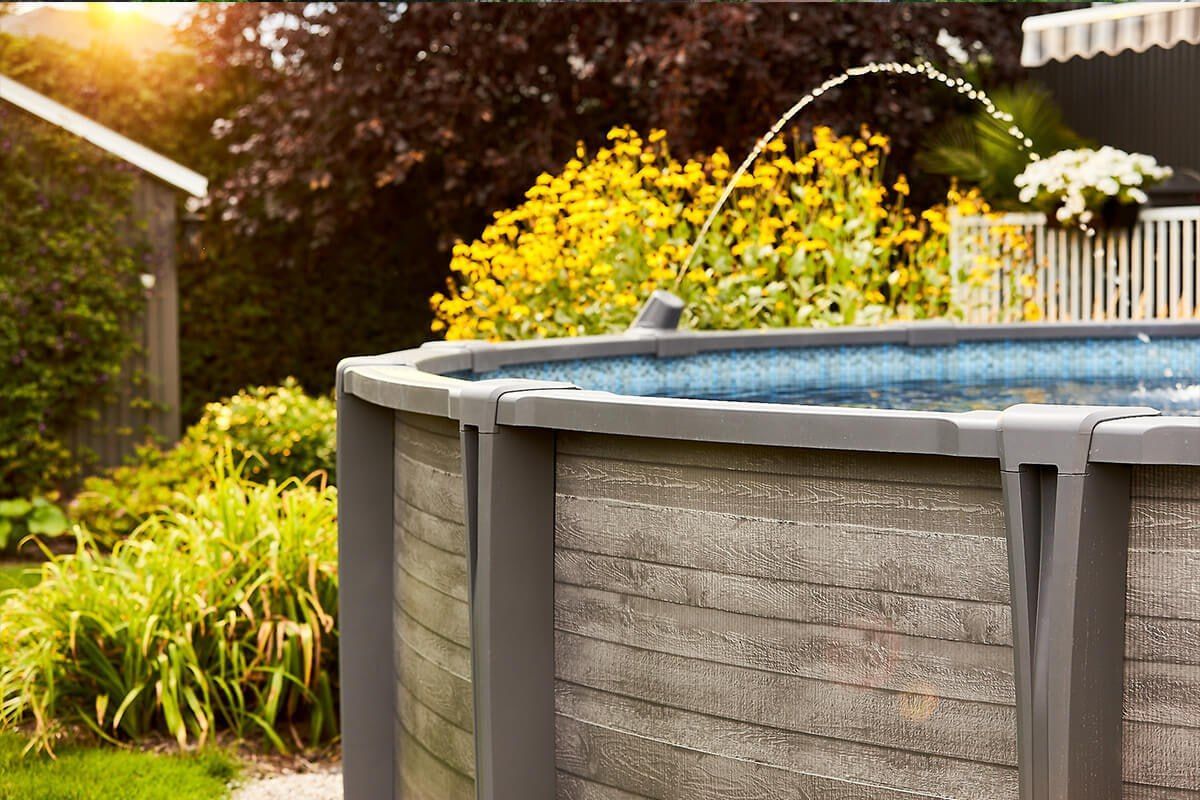
Not sure what's happening under your boards? Call (772) 758-5372 and we'll come walk the frame with you, show you what's sound, and tell you straight whether it's a fix or a rebuild.
Salt Air and the Metal Holding It Together
A wood deck is really a wood-and-metal deck. Screws, joist hangers, post bases, and bolts hold it together — and salt air goes after the metal long before it finishes off the wood.
Today's copper-based lumber treatments are also harder on plain steel than the old chemistry was. That's why the Florida Building Code (Residential, section R317.3) requires fasteners in treated wood to be hot-dip galvanized or another code-listed corrosion-resistant metal.
What corrosion looks like before it becomes a failure:
- Rust streaks running down the wood from screw heads or hanger nails.
- Screw heads that have popped and sit proud of the board.
- Hangers with flaking coating, usually on the lagoon-facing side first.
- Rails that move when you push on them. That's a safety item — fix it before anybody leans on it.
Replace a failed connector with one of matching or better corrosion rating, then check its neighbors. They've had the same exposure.
The Upkeep Routine That Actually Works
The decks that last in Sebastian get a little attention, often:
- Rinse monthly with fresh water — surface, rails, and underneath where you can reach.
- Clear the gaps. Oak leaves and pine needles packed between boards hold water against the joists.
- Clean before you seal, with a cleaner made for treated wood. A pressure washer is fine if you keep it low and moving.
- Give it two sunny days to dry before any sealer goes on — the hard part in rainy season.
- Seal when the water test says so. Sprinkle water on the boards. If it soaks in and darkens the wood within a few minutes, it's time.
That test beats any calendar, and the sunny side will fail it a season before the shade does. Pick a penetrating, water-repellent finish with UV protection — film-forming paints peel once moisture gets under them.
📌 Your Once-a-Year Deck Walk
Twenty minutes, a flashlight, and a flat screwdriver — every spring, and again after any tropical storm passes close.
- ✅ Probe every post base and both stair stringers
- ✅ Shine the flashlight up at the joist tops from underneath
- ✅ Check every hanger and post base for rust or flaking coating
- ✅ Push on every rail and the gate — nothing should move
- ✅ Water-test the boards in full sun, in shade, and in the splash band
- ✅ Clear the board gaps and pull anything piled against the frame
Got a paver patio off the back door too? Our Sebastian paver patio maintenance tips cover that side.
Already found soft posts, rusted hangers, or a rail that gives? That's when repair-versus-replace gets decided — call (772) 758-5372 and our decking crew will lay out both options with real numbers.
Real Lifespan: What Wears Out First
There's no honest single number for how long a wood deck lasts. A treated deck doesn't wear out all at once — it wears out in layers:
- Sealer — first to go, by design. That's what re-sealing is for.
- Boards — they gray, check, cup, and split, fastest in the sun and the splash band. They're the replaceable wear layer.
- Fasteners and connectors — on a lagoon-front lot, these can give out before the lumber does.
- Framing — joists and beams kept dry and ventilated can outlast more than one set of boards.
- Posts and footings — the foundation. If they're sound, almost everything above is fixable.
What shortens the clock: no airflow underneath, skipped sealing, packed gaps, and ignoring that first rusty hanger. What stretches it: ground-contact lumber in the frame, code-correct fasteners, and a yearly walk.
Cheap is the most expensive thing you can buy in Florida construction — and on a pool deck, the shortcuts hide in the frame.
Repair, Re-Board, or Rebuild
Once you've walked it, most Sebastian decks land in one of three buckets:
- Repair. A few soft boards, popped screws, or rusty hangers. Swap them, treat the cut ends, re-seal.
- Re-board. The surface is shot, but posts and joists pass the screwdriver test. Switching to composite? The joist spacing gets checked first — composite usually wants it tighter.
- Rebuild. Soft posts, rot in several joists, or a frame that was never right. New boards on that frame is throwing money at it.
A new deck around an above-ground pool runs $5,000–$10,000 on top of the pool. Square footage, deck height, full wrap versus a landing and stairs, rail and stair work, and board choice move it within that range.
A structural rebuild needs a permit — from the City of Sebastian inside city limits, or Indian River County for Roseland and other unincorporated addresses. Our crew pulls it either way. How we build full-wrap and partial decks lives on our wood deck installation page.
Planning an in-ground pool instead? That's a ground-level surface — pavers or a cool-deck finish like the ones Vero Beach homeowners use, laid by our licensed mason.
One Team for the Pool and the Deck Around It
A wood deck that lasts in Sebastian is decided on day one — the lumber rating, the fasteners, the footings. When the pool crew and the deck crew are the same crew, the splash band gets built for the water it's going to take.
Right Way sets the resin-coated, saltwater-ready above-ground pool — from delivery to first swim in under 7 days — and our own decking crew builds the deck around it in one to two weeks once permits clear. Two clocks, one contract.
Call (772) 758-5372 or schedule a consultation at rightwayenclosures.com. One team. One design. One timeline.
FAQs
What wears out first on a wood pool deck near the Indian River Lagoon?
The sealer goes first, then the boards — fastest on the sunny side and in the splash band nearest the pool. On lagoon-front Sebastian lots, screws and joist hangers can corrode before the lumber fails, while dry posts and framing outlast them all. Our decking crew builds on real footings with framing sized for the span.
How can I tell if my pool deck has rot?
Push a flat screwdriver into post bases, stair stringers, cut ends, and joist tops — sound wood resists and splinters, rotten wood lets the tip sink in and crumbles. In Sebastian, check the splash band and the lagoon-facing side first. We'll walk the frame with you if you'd rather not crawl under it.
Do I need to rinse salt off a wood deck?
Yes. Salt crystals draw moisture out of the air, so a salt-crusted deck stays damp longer and its screws and hangers corrode faster near the Indian River Lagoon. A monthly fresh-water rinse, plus one after windy weeks or heavy saltwater-pool use, is the easiest upkeep there is — and our crew details splash zones with that in mind.
Can I pressure wash a wood pool deck?
Yes, at low pressure with a wide fan tip and the wand kept moving — too much pressure gouges the softer grain and leaves the surface fuzzy. Use a cleaner made for treated lumber, then allow two sunny days before sealing. In Sebastian's rainy season, our crew plans that window around the afternoon storms.
Related services: Above-Ground Pools · Wood Deck Installation · Consultation