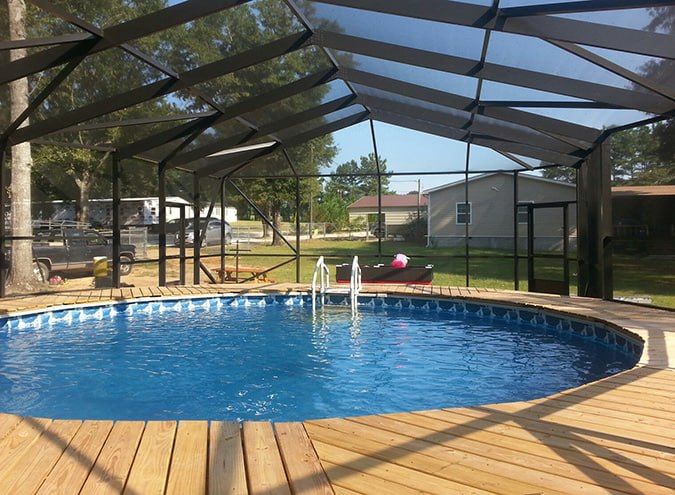
Pool Screen Enclosure Mesh in Palm Bay: No-See-Um vs. Standard
Start Your Transformation
Which screen you pick decides whether the bugs off Turkey Creek and the lagoon get in — here's how to choose.
Quick Answer
If your Palm Bay pool sits anywhere near Turkey Creek or the Indian River Lagoon, standard 18×14 screen mesh will not keep the no-see-ums out — you want 20×20 no-see-um mesh . The tighter weave blocks the biting midges that standard pool screen lets straight through. It costs a little more and cuts airflow and visibility slightly, but on a lagoon-side lot it's the difference between using your pool at dusk and getting eaten alive.
By the Right Way Enclosures team — Florida-licensed pool contractor (CPC1461491) and screen-enclosure specialty contractor (SCC131153510 / SCC131153892), serving Central and Eastern Coastal Florida. Last updated: 2026-07-24.
Which Screen Mesh Should You Choose?
Most people picking a pool screen enclosure obsess over the frame and roof style and treat the mesh as an afterthought. In Palm Bay, that's backwards. The mesh is the part that actually decides whether you can sit by the pool at sunset.
The screen you choose comes down to what you're keeping out and how much airflow and view you're willing to trade. There's no single "best" — there's the right one for your lot.
Here's the short version of who should pick what:
- Standard 18×14 fiberglass: fine for lots away from the water where regular mosquitoes and leaves are the main problem.
- 20×20 no-see-um mesh: the Palm Bay default near Turkey Creek, the lagoon, or any low, damp lot.
- Pet-resistant screen: the lower kick-plate zone if you've got dogs that lean, scratch, or bolt through screen.
Get the mesh right up front and you won't be paying to re-screen a brand-new enclosure two summers later because the gnats never stopped coming.
The Palm Bay No-See-Um Problem
No-see-ums — biting midges — are the reason mesh choice matters more in Palm Bay than in a lot of Florida. They breed in the muck along the Indian River Lagoon and the brackish edges of Turkey Creek, and they're worst at dawn and dusk exactly when you want to be outside.
The catch is in the name. A no-see-um is small enough to fly straight through standard 18×14 pool screen like it isn't there. Homeowners around Castaway Point, Bayside Lakes, and the Port Malabar canals learn this the hard way when a new enclosure still leaves them swatting at dusk.
That's why the local answer is 20×20 mesh — a weave tight enough to stop the midges. If your lot backs up to water or sits low and damp, this is the single most important spec on your whole enclosure:
- Near the lagoon or Turkey Creek: go 20×20 no-see-um, no debate.
- Low, damp, or canal-side lots: same — midges love still, wet ground.
- Drier interior Palm Bay lots: standard mesh may be enough, but the no-see-um upgrade is smart insurance.
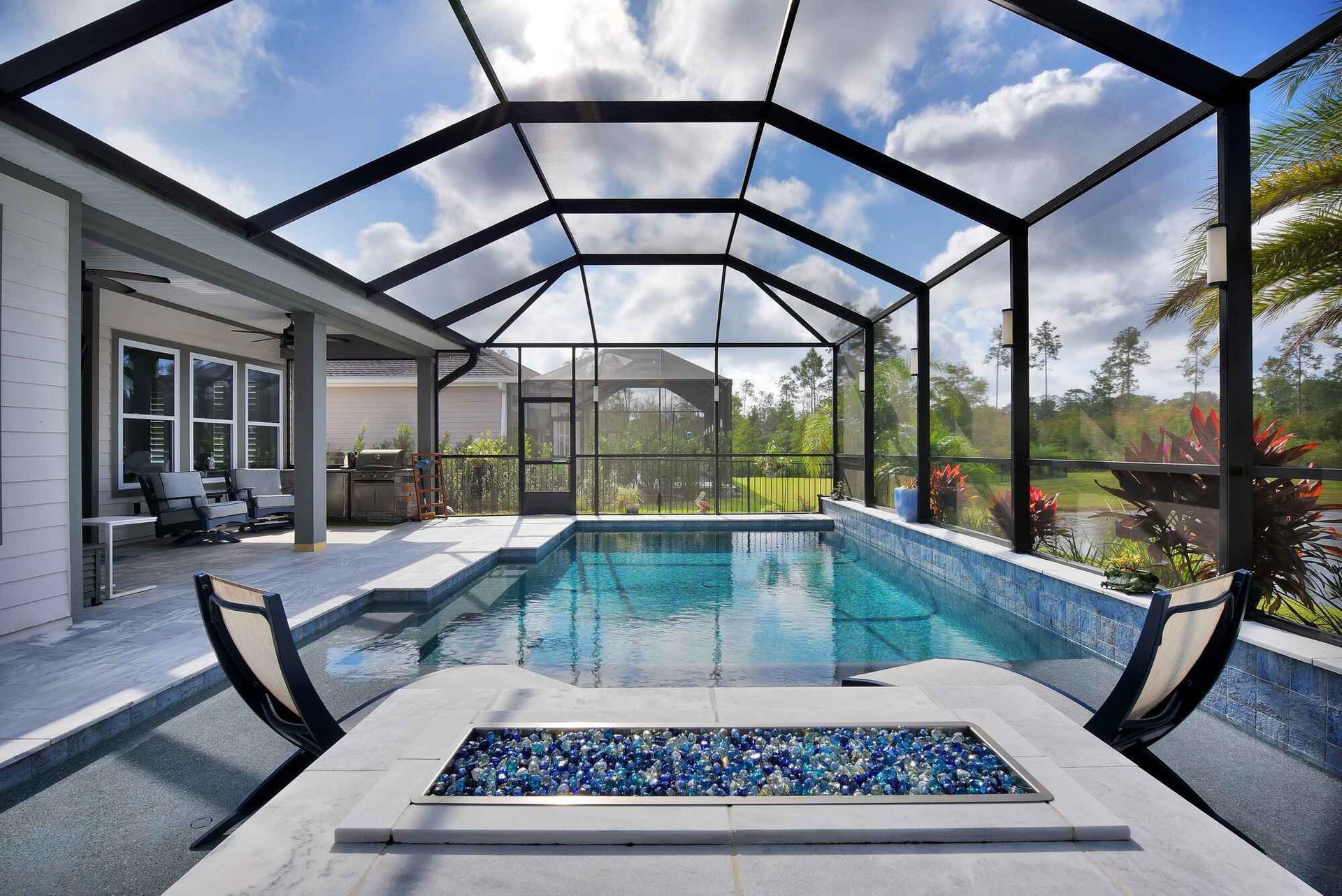
Screen Mesh Types Compared
Here's how the common screen options stack up for a Brevard pool enclosure:
- Standard 18×14 fiberglass: doesn't block no-see-ums. Best airflow and the clearest view. Best for interior lots dealing with leaves and mosquitoes only.
- 20×20 no-see-um: blocks no-see-ums. Airflow and view drop slightly. Best for lagoon-side, Turkey Creek, canal, or damp lots.
- Pet-resistant screen: partially blocks midges; heavier weave means a reduced view. Best for the kick-plate zone if you have dogs.
- Privacy / tint screen: reduces the view by design. Best for screening a hot-tub area or low-panel privacy.
For most Palm Bay pools we build, the practical answer is 20×20 no-see-um mesh on the walls, with a pet-resistant lower section if there are dogs in the house. It's a mix-and-match decision, not all-or-nothing.
What the Tighter Mesh Trades Off
We tell every homeowner the truth about no-see-um mesh, because the tighter weave isn't free of downsides. Better to know now than to be surprised.
Here's the honest tradeoff on 20×20 no-see-um screen:
- Airflow drops slightly. A tighter weave means a little less breeze passing through — noticeable on a dead-still day, not on a normal one.
- The view softens a touch. More threads per inch means marginally less crystal-clear sightline to the yard.
- It catches more pollen and dust. Finer mesh traps more, so it needs an occasional rinse with the hose to breathe well.
- It costs a modest upcharge over standard mesh — priced by the size of your enclosure. Your exact number comes in the consultation.
None of that outweighs actually being able to use your pool at dusk on a lagoon-side lot. But if you're on a dry interior lot with a strong breeze and no midge problem, standard mesh is a perfectly honest choice — and we'll tell you so.
Screen mesh is also the wear item on any enclosure. Florida UV breaks it down over roughly 7–10 years, while a properly built frame lasts decades, so plan on re-screening once or twice over the life of the structure. Our complete guide to re-screening a pool enclosure walks through what that looks like when the time comes.
The Frame Matters as Much as the Mesh
You can spec the perfect mesh and still end up with a failing enclosure if the hardware rusts out from under it. On the Space Coast, that's a real risk.
Every Right Way screen enclosure is built with 316 stainless steel hardware as standard — screws, fasteners, and frame connections. Galvanized hardware rusts in Brevard's salt-tinged, humid air and streaks your frame within a few years; stainless doesn't. This is the one place we won't cut, because the fasteners are what hold your enclosure to code through a storm.
We also engineer to the 150 mph Florida Building Code wind-load standard across the service area — inland Palm Bay lots included, not just barrier-island addresses. Screen mesh, frame, and anchors are one system, and we build the whole thing, permit pulled and inspected, with our own crews.
📌 Palm Bay Screen Mesh Cheat Sheet
- Lagoon / Turkey Creek / canal lot: 20×20 no-see-um mesh, every time
- Standard 18×14 lets no-see-ums straight through — fine only for drier interior lots
- Dogs in the house: add pet-resistant screen to the kick-plate zone
- Frame hardware: 316 stainless steel standard — galvanized rusts here
- Wind: 150 mph FBC engineering across Brevard
- Plan to re-screen once or twice over the enclosure's decades-long life
A full pool screen enclosure is a real investment, and financing is available through Lyon Financial and Foundation Finance Company for qualified homeowners.
FAQs
What screen mesh keeps no-see-ums out in Palm Bay?
20×20 no-see-um mesh. Standard 18×14 pool screen has gaps wide enough for biting midges to fly straight through, which is why homeowners near the Indian River Lagoon and Turkey Creek still get bitten inside a brand-new enclosure. The tighter 20×20 weave is the fix, and it's the mesh we default to on lagoon-side Palm Bay lots.
Is No-see-um screen worth it near the Indian River Lagoon?
Yes. No-see-ums breed in the muck along the lagoon and Turkey Creek and swarm at dawn and dusk, exactly when you want the pool. On a water-adjacent Palm Bay lot, the modest upcharge for 20×20 mesh is what makes the enclosure actually usable, instead of a cage the midges ignore.
How long does pool screen mesh last in Florida?
Roughly 7–10 years. Florida's intense UV slowly breaks down the mesh fibers, so screen is the wear item on an enclosure while the frame lasts decades. You'll likely re-screen once or twice over the structure's life, and finer no-see-um mesh needs an occasional rinse to clear trapped pollen and dust.
Does tighter screen mesh block the breeze?
Slightly. A 20×20 no-see-um weave has more threads per inch than standard 18×14, so airflow drops a little and the view softens a touch. On a normal breezy Space Coast day you won't notice, and blocking the biting midges off the lagoon is well worth the minor tradeoff.
Talk to Right Way
The mesh is a five-minute decision that shapes years of evenings by your pool. Get it right for your Palm Bay lot — lagoon-side gets no-see-um screen, dogs get pet-resistant panels — and the enclosure does its one job: keeping the outside out while you enjoy the inside.
Right Way builds the whole enclosure under one roof — mesh, 316 stainless frame, and roof — engineered to Brevard code and installed by our own crews. Not sure which mesh fits your lot? We'll walk it with you.
Call 772-758-5372 or schedule a consultation at rightwayenclosures.com.
One team. One design. One timeline.
Related services: Pool Screen Enclosures · Above-Ground Pools · Screen Enclosures & Repair
Companion guide: planning the build? See the Palm Bay screen enclosure timeline. A quality enclosure also protects your home's value.