Motorized Screens and Wind in Brevard: What They Handle and When to Roll Them Up
Start Your Transformation
How SunPro motorized screens behave in a Space Coast sea breeze, an afternoon squall, and a named storm — and the simple rule that protects them. For homeowners in Melbourne, Viera, Palm Bay, and the beachside towns along A1A.
Quick Answer:
SunPro motorized screens ride in side tracks and block up to 85% of wind and rain , so they handle Brevard's everyday sea breeze and a passing afternoon squall with the screens down. They are not hurricane protection. Roll them up when a tropical storm or hurricane watch is issued — while you still have power — so the fabric sits in its housing and the storm has nothing to push on.
Florida licensed & insured
Licensed in-house screen crew
Custom-built SunPro screens
Serving all of Brevard County
By the Right Way Enclosures team — Florida-licensed pool contractor (CPC1461491) and screen-enclosure specialty contractor (SCC131153510 / SCC131153892), serving Central and Eastern Coastal Florida. Last updated: 2026-09-28.
What a Motorized Screen Does in Wind — and What It Doesn't
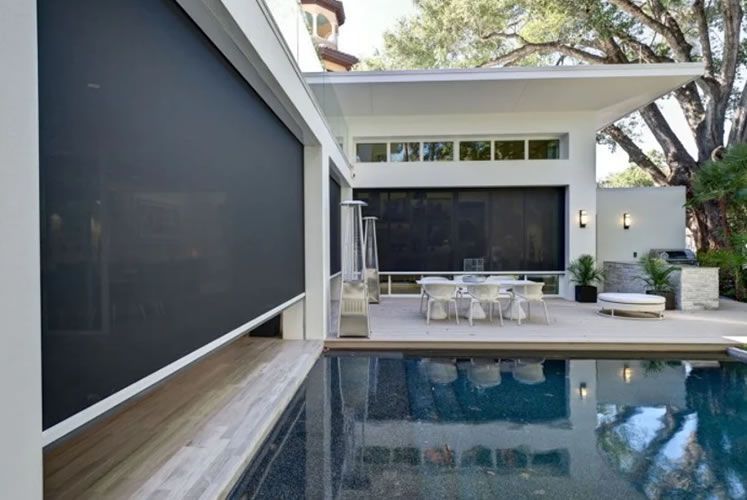
A motorized screen is a roll of fabric in a slim housing above an opening. Press the button and it drops into two side tracks that hold both edges. That track is the whole difference between a real motorized screen and a shade that flaps around.
Here's what a SunPro screen is built to do in weather:
- Cut the wind on the lanai. The fabric blocks up to 85% of wind and rain, so a gusty afternoon stays usable.
- Stop sideways rain. Florida storms rarely fall straight down. A lowered screen keeps the furniture dry through a passing cell.
- Stay put in its tracks. Both edges ride in the side tracks, so normal breezes don't pull the fabric loose.
And here's what it is not:
- Not a hurricane shutter. It isn't sold as impact protection for your windows or doors. If your home needs code-rated opening protection, that's a separate product.
- Not something to leave down in a named storm. More on that in section 4.
Brevard Wind, Three Ways: Beachside, Lagoon, and Inland
Brevard County isn't one wind zone in practice. Where your lanai sits changes how often the screens see real wind.
- Beachside along A1A: In Indialantic, Melbourne Beach, and Satellite Beach, the ocean breeze rarely quits. Screens here see steady wind most afternoons, plus salt spray on the tracks.
- Along the Indian River Lagoon: Riverfront homes in Melbourne and Palm Bay get a long, open fetch of water. Wind comes across the lagoon with nothing to slow it down.
- Inland in Viera and Suntree: More houses and trees break the wind. The bigger weather issue here is the afternoon thunderstorm and its gust front.
That's why we set up every job for the house we're standing at, not a catalog. A west-facing Viera lanai may need a solar-screen fabric for the afternoon sun more than anything. A lagoon-front house in Palm Bay needs its tracks set for steady wind.
Why a Lowered Screen Acts Like a Sail
The same thing that makes a motorized screen useful in a breeze makes it a liability in a hurricane. Fabric that stops 85% of the wind is catching most of the wind's force. That force doesn't disappear. It goes into the tracks, the housing, and whatever they're fastened to.
Think about what that means as the wind builds:
- In a sea breeze, the load is small and the tracks handle it all day.
- In a thunderstorm gust front, the load jumps for a few minutes. If the gusts get violent, rolling the screens up is the smart call.
- In tropical-storm or hurricane wind, a lowered screen is a sail bolted to your house. The fabric, the tracks, or the beam above can give, and flying parts become debris.
Rolled up, the fabric sits inside the housing. The wind has almost nothing to grab. That's the entire logic behind the storm rule, and it's why the walkthrough on every install includes rolling the screens up before a named storm.
If you want the sun-control side of solar-screen fabric, our guide on how motorized screens beat the Florida sun covers it.
The Storm Rule: Roll Up at the Watch, Not the Warning
Here's the one rule: when the National Hurricane Center issues a tropical storm or hurricane watch for Brevard, roll the screens up. A watch usually comes about 48 hours before tropical-storm-force winds are possible. A warning comes about 36 hours out.
Why the watch and not the warning?
- Power goes early. A hardwired motor can't retract without electricity. Outages often start with the first outer bands, well before the worst wind.
- Prep time disappears. In 2004, Frances and Jeanne hit Brevard three weeks apart. The second storm came while people were still cleaning up from the first.
- Nobody should be on a ladder in the wind. If a motor stalls, you want time to call us, not a crisis.
If you went with a solar-battery motor on a detached pergola or cabana, it keeps working in an outage as long as the battery is charged. Still roll it up at the watch.
📌 Named-Storm Checklist for Motorized Screens
- Roll every screen fully up at the tropical storm or hurricane watch
- Confirm each one stopped at its top limit, with no fabric hanging out of the housing
- Clear furniture and pots away from the tracks so nothing blows into them
- Leave the screens up until the storm has passed and power is steady
- Don't lower a screen to "block" storm wind — that's the load it can't carry
What Your Screens Mount To Matters
A motorized screen is only as solid as the surface under its housing and tracks. We look at that before we order anything. Here's what we check:
- A block or frame wall under a lanai roof: Usually the easiest mount. The housing fastens to the header beam, and the tracks run down the columns.
- An existing aluminum screen enclosure: Screens can go on the side of an enclosure that needs them. We check that the posts and beam in that bay can carry a screen and its tracks.
- A garage door opening: The housing mounts in the header above the door, and the tracks sit clear of the door's own track.
- A pergola or open patio: Often the hardest spot to reach with power. That's where the solar-battery motor earns its keep.
One SunPro screen covers an opening up to 30 feet wide and 22 feet tall. Wider openings get split at a post into two screens that run on the same remote.
What moves the price is mostly the opening count and size, the fabric, and the motor type. Surface-mount tracks for existing openings cost differently than recessed tracks on new construction.
Planning a new lanai or patio enclosure? Planning the screens in from day one saves a second install visit and gives a cleaner look. Our lanai installation page covers the enclosure side.
After the Storm: The Five-Minute Check
Once the wind is gone and the power is steady, don't just hit the button and walk away. Run through this first:
- Look down both tracks. Leaves, sand, and bits of shingle collect in them after a storm. Clear them before the fabric comes down.
- Rinse the tracks with fresh water if you're beachside. Salt spray dries into the channels.
- Lower each screen once and watch it. It should run smooth and square. If it binds or drags, stop it.
- Don't force a stuck screen. Pulling on the fabric can bend the bottom bar. Call us instead.
For the full year-round routine, see our guide on maintaining a motorized retractable screen system. For the enclosure around your pool, the hurricane prep checklist for screen enclosures covers the cage itself.
SunPro backs the hardware for life, the motor and controls for 5 years, and the fabric for up to 15 years depending on which one you pick. That's manufacturer coverage. We stay your local call when something needs service.
One Crew for the Screens and the Enclosure Around Them
Motorized screens on a Brevard lanai work best when the same crew that measured them also knows the enclosure, the pool, and the power plan around them. That's how we build. Our licensed screen crew handles the measure, the install, and the walkthrough, including the storm routine.
Call (772) 758-5372 or schedule a consultation at rightwayenclosures.com. One team. One design. One timeline.
FAQs
Can motorized screens stay down during a hurricane?
No. Roll them up when a tropical storm or hurricane watch is issued for Brevard. A lowered screen catches most of the wind and loads the tracks and the beam above like a sail. Rolled up, the fabric sits in its housing. We walk every Brevard homeowner through this storm routine at install.
How much wind can a motorized screen handle?
A lowered SunPro screen blocks up to 85% of wind and rain, and its side tracks hold both edges through everyday Space Coast sea breezes and passing squalls. It is not rated as hurricane protection. When gusts turn violent or a named storm is coming, roll it up. We set the tracks for your exposure.
What happens to motorized screens when the power goes out?
A hardwired motor stops until power comes back, so the screen stays wherever it was. That's why Brevard homeowners should roll screens up at the storm watch, before outages start. For pergolas and cabanas, a solar-battery motor keeps running on its charge. We plan the power source during the on-site measure.
Can I add motorized screens to my existing pool enclosure in Melbourne?
Yes, on the bays that need them. A screen mounts inside an enclosure opening, with the housing on the beam and tracks down the posts. Salt air and lagoon wind in Melbourne make the mount matter, so we check that each bay's posts and beam can carry the screen before ordering.
Related services: Motorized Screen Installation · Lanai Installation & Repair · Patio Screen Installation