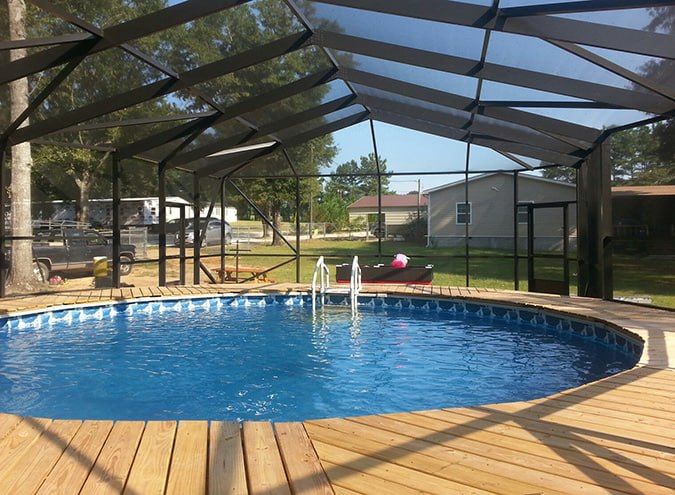
Adding Motorized Screens to an Existing Lanai or Pool Cage in Palm Bay
Start Your Transformation
What your current beams, slab, and wiring decide about a motorized screen retrofit — from Port Malabar block homes to Bayside Lakes lanais.
Quick Answer: Usually, yes. Most motorized screen jobs in Palm Bay are retrofits onto a lanai beam, a garage header, or a bay of an existing pool cage — but the existing structure has to carry the housing and the wind load on a lowered screen. The beam, the slab under the tracks, and the path for power decide whether it's a clean install or a job that needs prep first.
In This Article
- What a Retrofit Actually Means
- Reading the Header You Already Have
- Mounting to an Existing Pool Cage
- Tracks, Slab, and the Bottom Seal
- Getting Power to the Motor
- Openings That Need Work First
- Permits and Paperwork in Palm Bay
- FAQs
Florida licensed & insured
City of Palm Bay permit-pulling
In-house screen crews
One crew, one contract
By the Right Way Enclosures team — Florida-licensed pool contractor (CPC1461491) and screen-enclosure specialty contractor (SCC131153510 / SCC131153892), serving Central and Eastern Coastal Florida. Last updated: 2026-10-02.
What a Retrofit Actually Means
Very few motorized screens go onto brand-new construction. Most get added to something that's already standing.
In Palm Bay, that usually means one of three hosts:
- A covered lanai or back porch — a roofed space under the house roof, with open sides between columns.
- A bay of an existing pool cage — usually the opening between the cage and the house, or a wide wall section facing the yard.
- A garage door opening — the header is already there and built to span the width.
Each one is a different structural question. This guide is about that structure: what holds the screen up, what it seals against, and where the power comes from. If you're drawn to motorized screens for the wide-open look on a big opening, that lifestyle side is covered in our guide to large openings.
Reading the Header You Already Have
The roller housing hangs from the top of the opening. Whatever it bolts to has to hold it up and resist the pull of a lowered screen in a sea breeze.
On Palm Bay homes we look at a few things right away:
- What the header is made of. Older Port Malabar homes are mostly concrete block with a poured or block-and-lintel header. Many lanais have wood beams wrapped in aluminum or stucco. Newer Bayside Lakes homes often carry the lanai under the main roof on a framed beam.
- What's hiding behind the wrap. Aluminum fascia or stucco can cover a beam with water damage. We probe before we promise.
- How much room there is. The housing needs depth and height at the top of the opening. A low header or a ceiling fan close to the edge can change the plan.
- Level and straight. A sagging beam means a screen that rolls crooked.
A sound block or wood header is usually a good host. If it isn't sound, the fix comes before the screen. Bolting a new screen to a soft beam just moves the problem.
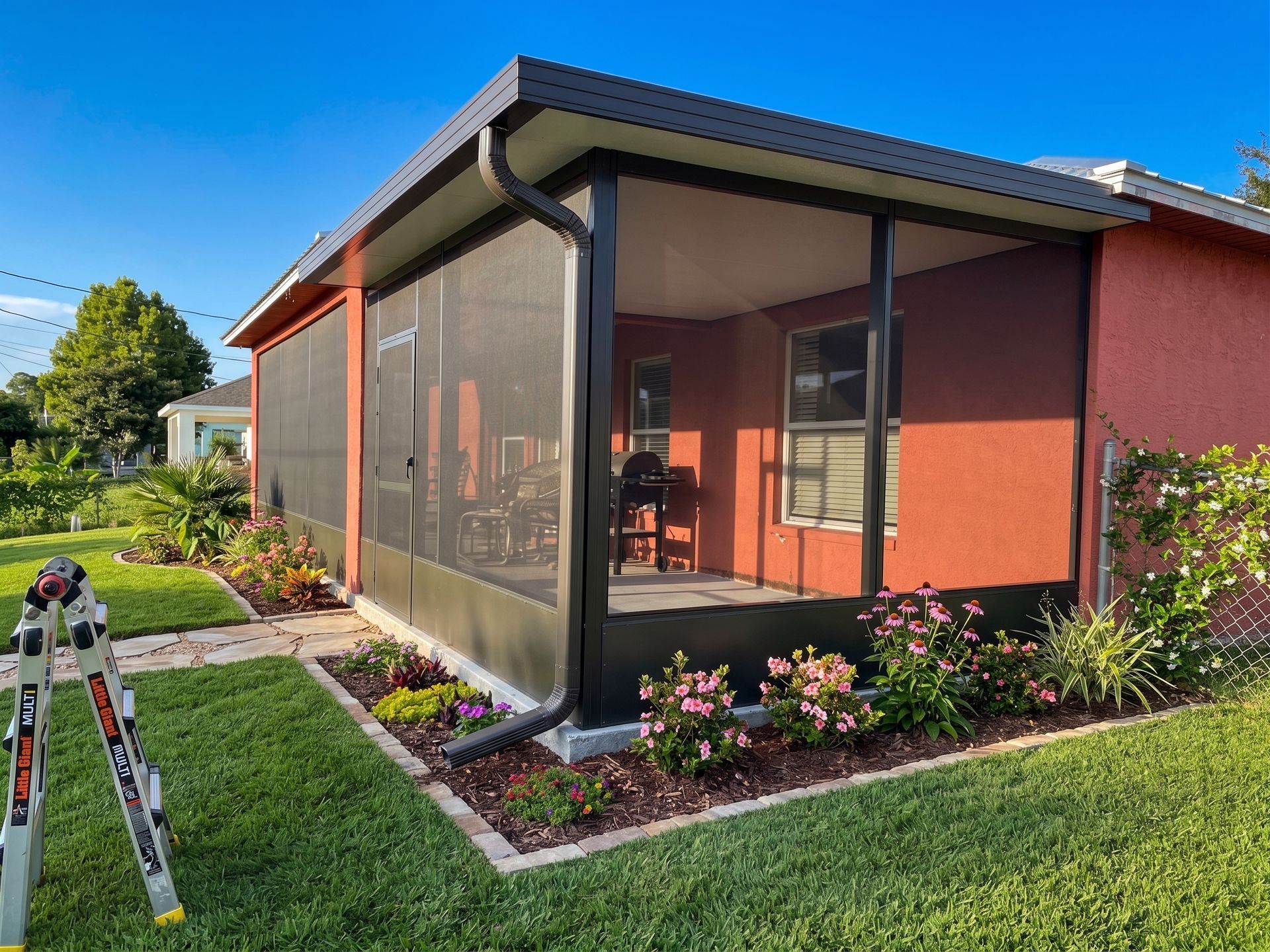
Want to know if your lanai can take motorized screens as it stands? Book a free on-site consultation and we'll check the header, measure every opening, and map out the power. Call (772) 758-5372.
Mounting to an Existing Pool Cage
Hanging a motorized screen in a pool cage bay is common. It's also where the most care goes, because an aluminum cage was engineered for the screen panels it was built with, not for added loads.
When a screen comes down in that bay, the cage feels two new things:
- Dead weight — the housing, motor, and rolled fabric hanging from a beam.
- Wind load — a lowered screen catches more wind than open mesh panels, and it pushes on the posts and beam it's mounted to.
So before we commit to a cage bay, we look at:
- Beam and post sizes in that bay, and whether they can take the housing without extra support.
- Condition of the cage — corroded fasteners, loose anchors at the deck, or a beam that's already flexing.
- Whether reinforcement is needed — an added post, a heavier beam, or a dedicated mounting member, backed by the manufacturer's attachment details or engineering.
If you want to know how the parts of a cage carry load, our walkthrough of pool cage anatomy explains the beams, purlins, and posts. [TRACY: confirm track/hardware spec]
Tracks, Slab, and the Bottom Seal
The side tracks hold the fabric edges and keep the screen in line. They need flat, plumb surfaces to fasten to — a column, a post, or a wall return.
The bottom is where retrofits get tricky. Lanai slabs in Florida are poured with a slight slope so rain runs out, not in. That's good for drainage, but it means the floor isn't level across a wide opening.
What we check at the floor:
- Slope across the opening — the bottom bar has to meet the floor evenly, or no-see-ums find the gap.
- The surface — bare slab, pavers, tile, or a deck. Pavers can settle and leave a gap later.
- The old screen panel — on a cage bay, the existing panel and its kick plate usually come out where the motorized screen goes.
- Water at the threshold — sideways rain will collect where the bottom bar sits.
If you're thinking about putting a solid roof on part of the cage first, read how hard-roof screen enclosures change what you can mount to.
Getting Power to the Motor
Every motor needs power. On an existing lanai, the question is how to get it there without ugly cords or a surprise electrical bill.
The common routes:
- Hardwired from a nearby circuit — conduit run along the beam to a junction at the housing. Clean, but it's electrical work, so it needs a licensed electrician and a permit.
- A dedicated outdoor receptacle — if the motor is a plug-in type, it still needs a properly protected outdoor outlet at the top of the opening.
- Battery or solar motors — no wiring run at all, with trade-offs on charging and cloudy weeks.
Older Port Malabar homes may have a lanai with one light and one outlet on an old circuit. That's fine, but it's worth checking before you assume a screen can share it. For the full rundown on power options and outages, see our companion guide on motorized screens and power outages. [TRACY: confirm which motor options we install — hardwired, plug-in, battery/solar]
Got a lanai or cage bay you're ready to finish? Call (772) 758-5372. We'll tell you up front whether it's a straight install or needs prep, and you'll get one price for the whole job.
Openings That Need Work First
Some openings won't take a motorized screen as they stand. Better to find that at the measure than on install day.
📌 Retrofit Site Check
- Header — sound, level, and deep enough for the housing?
- Sides — plumb surfaces for both tracks, top to bottom?
- Width — can one screen span it, or does it need a center post? [TRACY: confirm maximum single-screen width]
- Floor — slope and surface the bottom bar can seal against?
- Power — a circuit or outlet within reach, or a battery motor?
- Cage bays — beam and posts checked for the added load?
The usual fixes:
- Too wide — split the opening with an intermediate post and run two screens.
- Out of square — shim, build out, or add a mounting member so the tracks run true.
- Rotted or soft header — repair or replace it first. That's a carpentry or framing step, and we'll tell you if it's outside our scope.
- Light cage beam — reinforce the bay or choose a different opening for the screen.
None of these kill the project. They just change the scope, and you should see them in writing before you sign.
Permits and Paperwork in Palm Bay
A motorized screen retrofit is usually a permitted job. It fastens new load to a structure, and hardwired motors mean new wiring. Inside city limits, that goes through the City of Palm Bay's Building Division.
Expect the permit file to show:
- Each opening — location and measured size.
- The attachment — how the housing and tracks fasten to your existing beam, cage, or wall.
- The electrical — the circuit and wiring for hardwired motors.
Many Bayside Lakes homes also sit under an HOA, and that's a separate approval on top of the permit. For the full permit picture across Brevard, see our companion guide on motorized screen permits in Brevard County.
One more thing, said plainly: a motorized screen is not a hurricane shutter. It gets rolled up before a storm. Adding one to your cage doesn't make the cage storm protection. [TRACY: confirm wind rating]
FAQs
Can motorized screens be added to my existing pool cage in Palm Bay?
Yes, in most cases. The housing usually mounts in a cage bay, often the opening next to the house. The beam and posts in that bay have to carry the added weight and wind load, so we check sizes and corrosion first. Our crew reinforces the bay or picks a better opening when needed.
Do I have to take out my old lanai screens to install motorized ones?
Usually, yes, in the openings getting a motorized screen. The fixed panel and kick plate come out so the tracks and bottom bar can seal properly. Other openings can keep their panels. We plan which openings convert during the first visit, so you know exactly what changes on your Palm Bay lanai.
Can a wood lanai beam hold a motorized screen?
Yes, if the beam is sound. Many Palm Bay lanais have wood beams wrapped in aluminum or stucco, and water damage can hide behind the wrap. We probe the beam before ordering anything. If it's soft or sagging, the repair comes first, and you'll see that in the written scope.
Do I need an electrician to add a motorized screen to my lanai?
Yes, for a hardwired motor. Running a new circuit or extending one is electrical work, and in Palm Bay it needs a licensed electrician and a permit. Battery or solar motors skip the wiring. We coordinate the electrical as part of the job so you're not managing a second contractor.
The Bottom Line
Most Palm Bay homes can take motorized screens on a lanai, a cage bay, or a garage without starting over. The work is in the details: a header that can carry the housing, a floor the bottom bar can seal against, and a clean path for power.
We look at all of that at the first visit and put it in one written scope. If you're still deciding between screens and a new enclosure, our companion guide on motorized screens vs. a full screen enclosure lays out the choice. And if you're thinking bigger, see how a screen enclosure can extend your living space.
Call 772-758-5372 or schedule a consultation at rightwayenclosures.com. One team. One design. One timeline.
Related services: Motorized Screen Installation · Lanai Installation and Repair · Pool Screen Enclosures · Free Consultation