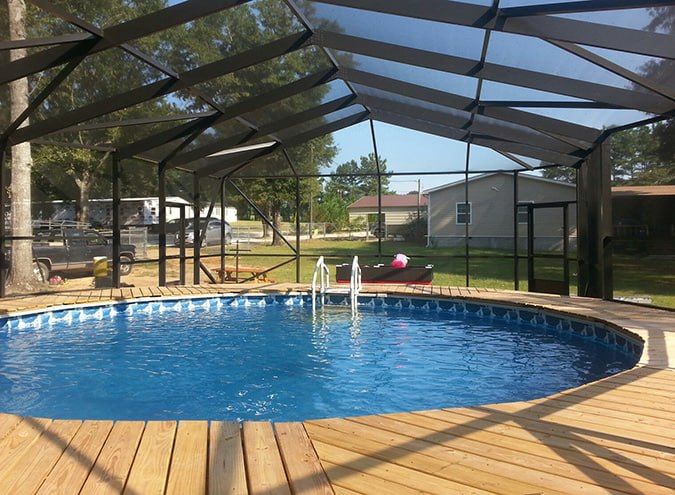
Dogs and Above-Ground Pools in Sebastian: Liners, Ladders, and Lagoon Season
Start Your Transformation
Your dog is going to want in the pool. Here's how to keep the liner in one piece, give the dog a real way out, and handle the Sebastian hazards that have nothing to do with chlorine.
Quick Answer
Yes, most dogs can swim in an above-ground pool, but they need a way out they can actually use — a standard A-frame ladder isn't one. Trim the claws to protect the vinyl liner, keep the chemistry balanced, rinse the dog after, and clean the skimmer more often. In Sebastian, the backyard pool is also the safer swim when the Indian River Lagoon has an algae alert.
Florida licensed & insured
City of Sebastian permit-pulling
Resin-coated, saltwater-ready
In-house pool & deck crews
By the Right Way Enclosures team — Florida-licensed pool contractor (CPC1461491) and screen-enclosure specialty contractor (SCC131153510 / SCC131153892), serving Central and Eastern Coastal Florida. Last updated: 2026-09-23.
Can Dogs Swim in an Above-Ground Pool?
Yes. Plenty of Sebastian families find out the Lab likes the new pool more than the kids do. A dog in a well-kept pool isn't a problem for the pool or the dog.
The trouble starts when owners treat the dog like a small person. Dogs get in differently, get out differently, and put different wear on the pool. Here's what's actually different:
- Getting out. A dog can't climb ladder rungs. It needs a step, a ramp, or a platform.
- The liner. Claws press on vinyl in a way bare feet never do.
- The filter. One shedding dog can load a skimmer basket faster than a pool party.
- Supervision. Dogs tire out in water, and a tired dog that can't find the exit is in real danger.
None of that is a reason to keep the dog out. It's a reason to set the pool up right the first time.
Claws, Liners, and What Actually Tears
The wall on our pools is a resin-coated structure , and a dog isn't going to hurt it. The vinyl liner inside is the part to protect. It's tough against water pressure, but a sharp claw dragged across it in the wrong spot can leave a scratch or a puncture.
Most liner damage from dogs happens at the waterline and on the wall near the entry. That's where a dog scrambles when it wants out. On the floor, a dog is mostly paddling, not digging.
Ways to keep the liner in one piece:
- Trim and file the claws before the swimming season and keep them short. Rough edges do more damage than length.
- Give the dog one clear entry and exit point so the scrambling happens on a step, not the liner.
- Choose a thicker liner at install if the dog is going to swim regularly. Ask about thickness in mil, the real measurement.
- Keep a vinyl patch kit on the shelf. A small tear patched early stays small.
If the dog won't be trained to use one exit, the liner will take the hits. Plan for that before the water goes in.
The Exit Problem: Ladders Are Built for People
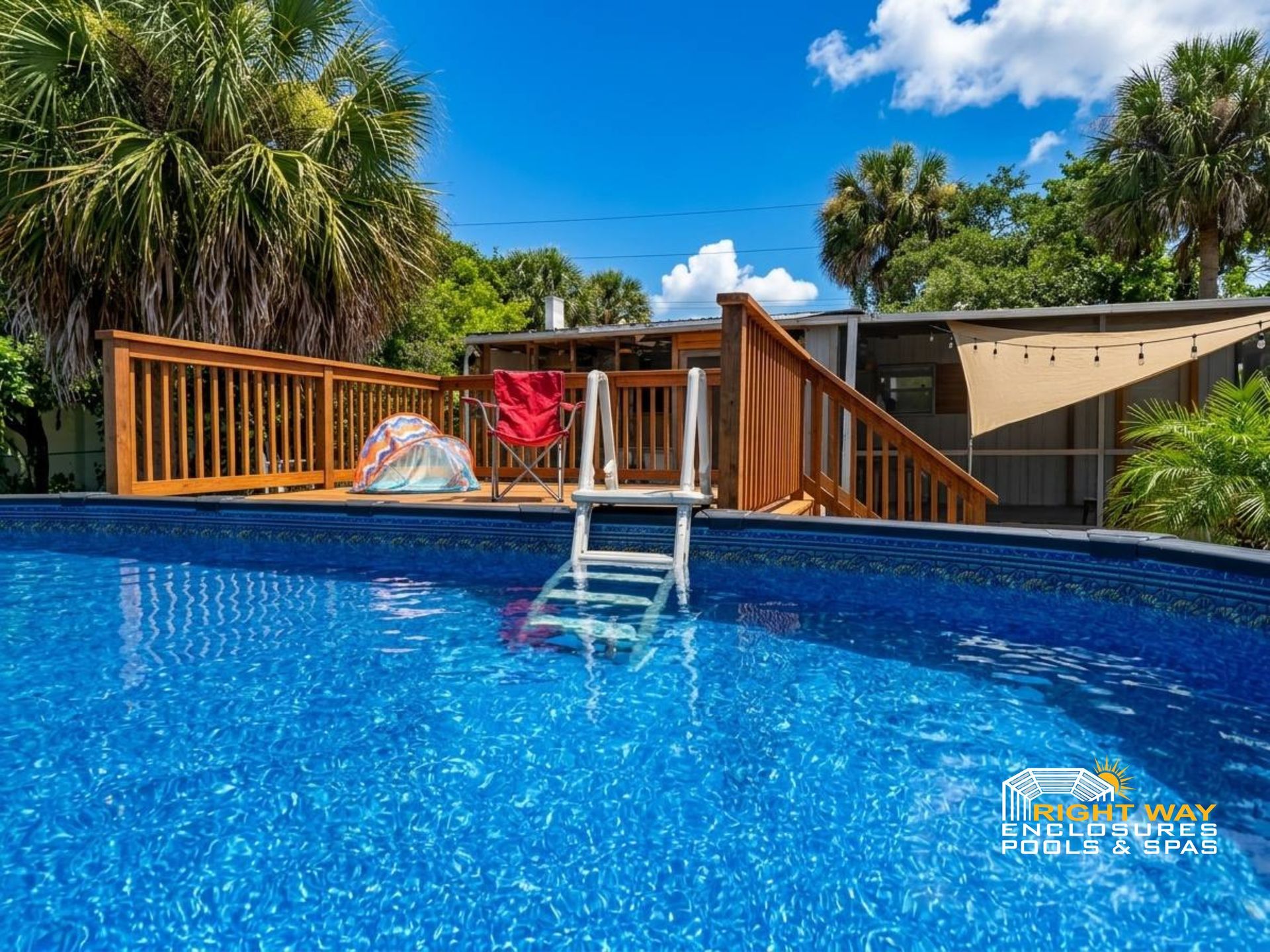
This is the part that matters most. A standard above-ground A-frame ladder has narrow round rungs. A person grabs the rails and climbs. A dog can't.
A dog that can't find a way out swims the wall looking for one. It paws at the top rail, tires out, and panics. Pet drowning in backyard pools happens this way, and it happens with strong swimmers.
Exit options that work for dogs:
- In-pool steps with wide, flat treads. A step unit that sits in the water gives a dog something to stand on and walk up.
- A pool ramp made for pets. These float or mount at the edge, with a textured surface the dog can grip.
- A deck with a step-down into the water. When the pool is ringed by a deck, the dog has a level platform to climb onto instead of a bare rail.
Then teach it. Put the dog in near the exit, guide it out, and repeat until it heads there on its own.
📌 Dog-Ready Above-Ground Pool Checklist
- A dog-usable exit: flat steps, a pet ramp, or a deck step-down
- Claws trimmed and filed before the season starts
- One trained entry and exit point, not the whole wall
- Fresh drinking water poolside so the dog doesn't drink the pool
- A rinse after every swim, and a skimmer basket checked daily
- The ladder locked or removed, and gates latched, when nobody's watching
That last item isn't only about the dog. In Florida, when the pool wall itself serves as the safety barrier, the ladder has to be removable or lockable. Our barrier code guide walks through how that works. The Brevard rules it covers come from the same Florida law, so the basics apply in Sebastian too.
Chlorine, Salt, and What Your Dog Drinks
A properly balanced pool is fine for a dog to swim in. The problems come from bad balance and from drinking.
We recommend a saltwater system , and it suits dogs well. A salt pool runs around 3,000 parts per million of salt, while seawater is closer to 35,000.
That's why a salt pool feels soft on the coat and eyes. We install traditional chlorine too, and your family makes that call.
What to watch either way:
- Drinking. A few laps of pool water won't usually hurt a dog, but a dog that gulps it can get an upset stomach. Keep a full water bowl by the pool.
- Chemistry after a swim day. Dogs bring in dirt, oils, and sometimes worse. Test the water more often in heavy-use weeks.
- Flea and tick products. Many topical treatments tell you to keep the dog out of water for a couple of days after applying. Check the label, because swimming can wash the product off and into your pool.
- A rinse after. Fresh water from the hose gets chlorine or salt off the coat and keeps skin from drying out.
Hair, Sand, and the Filter
A dog pool needs a little more cleaning. It's not hard work, but it's regular.
Sebastian yards are sand. A dog that runs the yard and dives in brings that sand with it, along with the sandspurs stuck in its coat. Add Florida shedding and the skimmer fills fast.
Here's the routine that keeps it in check:
- Empty the skimmer basket daily during swim season. Hair mats up and starves the pump of water.
- Vacuum the floor when you see sand settling. Grit ground into the liner by paws wears it over time.
- Clean or backwash the filter on a tighter schedule than the manual suggests.
- Rinse the dog before the swim when it's been rolling in the yard.
If you want less debris overall, a screen enclosure keeps a lot of the leaves and bugs out. It won't stop the dog from bringing in the yard, though.
Sebastian Hazards That Aren't in the Pool
Here's the local reason a backyard pool makes sense for a Sebastian dog. The Indian River Lagoon is right there, and in some summers it's no place for a swim.
The Florida Department of Health has put out blue-green algae alerts on stretches of the Indian River Lagoon in past years. Dogs are the ones most at risk, because they swim through the scum and then lick it off their coats. A balanced backyard pool takes that off the table.
Two more local hazards to know about:
- Cane toads. These invasive toads live across South and Central Florida, including the Treasure Coast. They come out at night around pools, lights, and pet bowls. A dog that mouths one can get very sick fast. If it happens, wipe the dog's gums and tongue with a wet cloth and call your vet right away.
- Hot surfaces. Florida sun heats up anything a dog walks on around a pool. Concrete decks can burn paws, and our guide to cool decking for Vero Beach pools explains why finish matters. Composite boards get hot too, so plan for shade and lighter colors.
Planning a Pool Around the Dog
If you're still shopping, build the dog into the plan now. Getting the exit and the deck right at install costs less than retrofitting them later.
What to decide up front:
- Round or oval. An oval gives a dog a longer straight swim and more room to stay clear of the kids.
- The deck. A wood or composite deck at top-rail height gives the dog a platform and gives you the step-down exit. See our wood & composite deck options.
- Water system. Saltwater if you want the gentler feel. Chlorine if you prefer it.
- Where it sits. Keep it away from the spots the dog uses to dig.
Financing is available through HFS Financial, Lyon Financial and Foundation Finance Company for qualified homeowners.
The City of Sebastian permit usually comes back in 1–2 weeks. Our Sebastian permit guide covers that step in detail.
FAQs
Can my dog ruin an above ground pool liner?
Yes, it can, mostly at the waterline where a dog scrambles to get out. Trimmed, filed claws and one trained exit point prevent most damage. A thicker liner helps if the dog swims often. We plan the entry and exit with Sebastian families before the liner goes in, so the claws land on a step.
How does a dog get out of an above ground pool?
With steps, a pet ramp, or a deck step-down, not a standard ladder. Dogs can't climb narrow round rungs, so they swim the wall looking for a way out and tire fast. We plan the steps and a deck step-down with Sebastian families at install, then you train the dog to use it.
Is a saltwater pool better for dogs than chlorine?
For most dogs, yes. A salt pool runs around 3,000 ppm of salt, under a tenth of seawater, and feels softer on the coat and eyes. Balanced chlorine is safe too. We recommend saltwater on our Treasure Coast installs and build chlorine systems for families who prefer them.
Is the Indian River Lagoon safe for my dog to swim in?
Not always. The Florida Department of Health has issued blue-green algae alerts for parts of the lagoon, and dogs are most at risk because they swallow water and lick their coats. A balanced backyard pool is the safer swim during an alert.
Our in-house crew handles the City of Sebastian permit, the pad, the pool, the deck, and the inspection. That goes for Sebastian Highlands, Roseland, and the rest of Indian River County.
Call 772-758-5372 or schedule a consultation at rightwayenclosures.com. One team. One design. One timeline.
Related services: Above-Ground Pools · Wood & Composite Decks · Pool Screen Enclosures
Companion guide: Above-Ground Pool Permits in Sebastian, FL