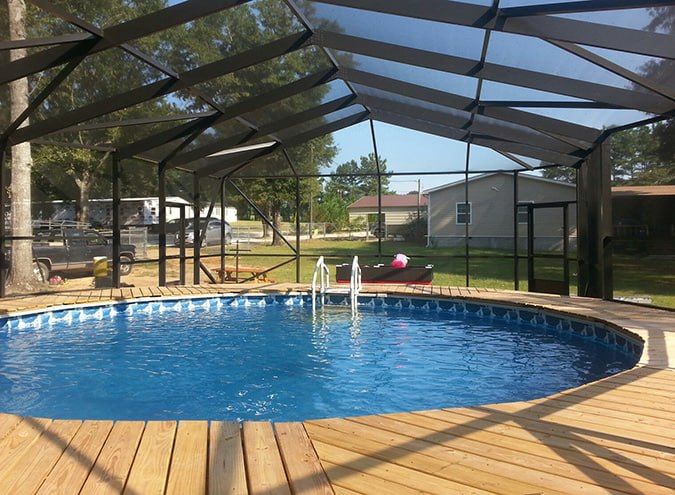
Pool Interior Finishes: How to Choose the Right Color for Your Water
Start Your Transformation
Your pool's interior finish is what sets the water color. Light finishes(white or tan plaster, light quartz) read bright, tropical blue and let you see the bottom; dark finishes(grey, blue, or teal quartz and pebble) go deep and mirror-like and run a few degrees warmer. In Florida's intense sun and salt-chlorinated water, quartz and pebble outlast plaster and hold their color better. Pick the finish during the design phase — changing it after the pour is expensive. Right Way walks you through real samples before anything is set.
The Finish Determines the Water Color
Here's the thing most homeowners don't realize until they're standing over the sample board: the water in a pool has no color of its own. What you're looking at is the interior finish, seen through the water and the sky above it. The material and color you pick is the water color.
That makes the finish one of the highest-impact design decisions in the whole build — and one of the hardest to change later. Resurfacing a concrete pool to a different color is a real project, not a touch-up. Getting it right at the design stage is how you avoid living with a color you didn't expect.
Finish choices break down by pool type:
- Concrete / gunite pools — plaster, quartz, or pebble applied over the shell
- Fiberglass pools — a pigmented gelcoat built into the shell at the factory
- Vinyl-liner pools — a printed liner pattern (a different decision, not covered here)
Light vs. Dark in Florida Sun
The first fork in the road is light versus dark, and in Florida the sun exaggerates both directions.
Light finishes — white, light grey, sandy tan — reflect sunlight and read as a bright, "electric" tropical blue. They make the bottom of the pool easy to see, which is a genuine safety plus for families with kids, and they hide calcium scale better in Florida's hard water. The tradeoff is that light plaster shows dirt and leaf stains more visibly between cleanings.
Dark finishes — deep blue, teal, charcoal, and most pebble blends — turn the pool into a mirror that reflects the sky, palms, and your enclosure. They read deeper and more dramatic, and they absorb more heat, which nudges the water a few degrees warmer and stretches the swim season a little.
Two honest tradeoffs on dark finishes before you fall in love:
- They can show a calcium scale line more clearly in Florida's hard water, so they reward good water chemistry.
- They swallow light at night — you'll want stronger or additional LED lighting to get the same nighttime glow a white pool gives you for free.
Plaster vs. Quartz vs. Pebble vs. Gelcoat
Material affects color range, texture underfoot, and how long the finish lasts before it needs attention. Here's the honest side-by-side:
| Finish | Water Color Range | Texture | Typical Lifespan | Trade-off to Know |
|---|---|---|---|---|
| White plaster | Classic light blue | Smooth | ~7–12 years | Lowest cost, but porous — stains and etches more, shortest life |
| Colored quartz | Bright blue to deeper blue-green, with sparkle | Smooth, slight grip | ~15–25 years | Holds up better to salt/chemistry than plaster; mid-range |
| Pebble | The widest range — light lagoon to deep lake | Textured (pebbled) | ~15–25 years | Most durable and color-rich, but can feel rough underfoot |
| Fiberglass gelcoat | Deep blues and teals, very smooth | Glass-smooth, non-porous | Built into the shell — no resurfacing | Color is chosen at the factory; no on-site custom blending |
For a custom concrete pool, quartz and pebble are the finishes that reward the higher upfront spend with years you don't spend resurfacing. For a fiberglass pool, the gelcoat color is locked in when you pick the shell — so that color decision happens even earlier. Pricing depends on pool size and finish; we give you the real number at your design consultation. Financing is available through Lyon Financial and Foundation Finance Company for qualified homeowners.
Central and Eastern Coastal Florida trusted experts in custom pool construction, screen enclosures, concrete, pavers, and outdoor kitchens.
What Florida Sun, Salt & Landscaping Do to the Color
The sample in your hand and the water in your pool will not look identical — and in Florida, three local factors move the color more than most homeowners expect.
- The sun. Treasure Coast and Space Coast sun is intense and direct. A finish that looks like a soft mid-blue on a cloudy sample day can read almost neon at noon in July. The more direct sun your pool gets, the more vibrant every finish looks.
- Salt-chlorinated water. Most of our clients run a saltwater system, and salt plus normal pool chemistry is harder on a finish over time. This is exactly where quartz and pebble earn their keep — they resist the etching and dissolution that shortens the life of plain white plaster.
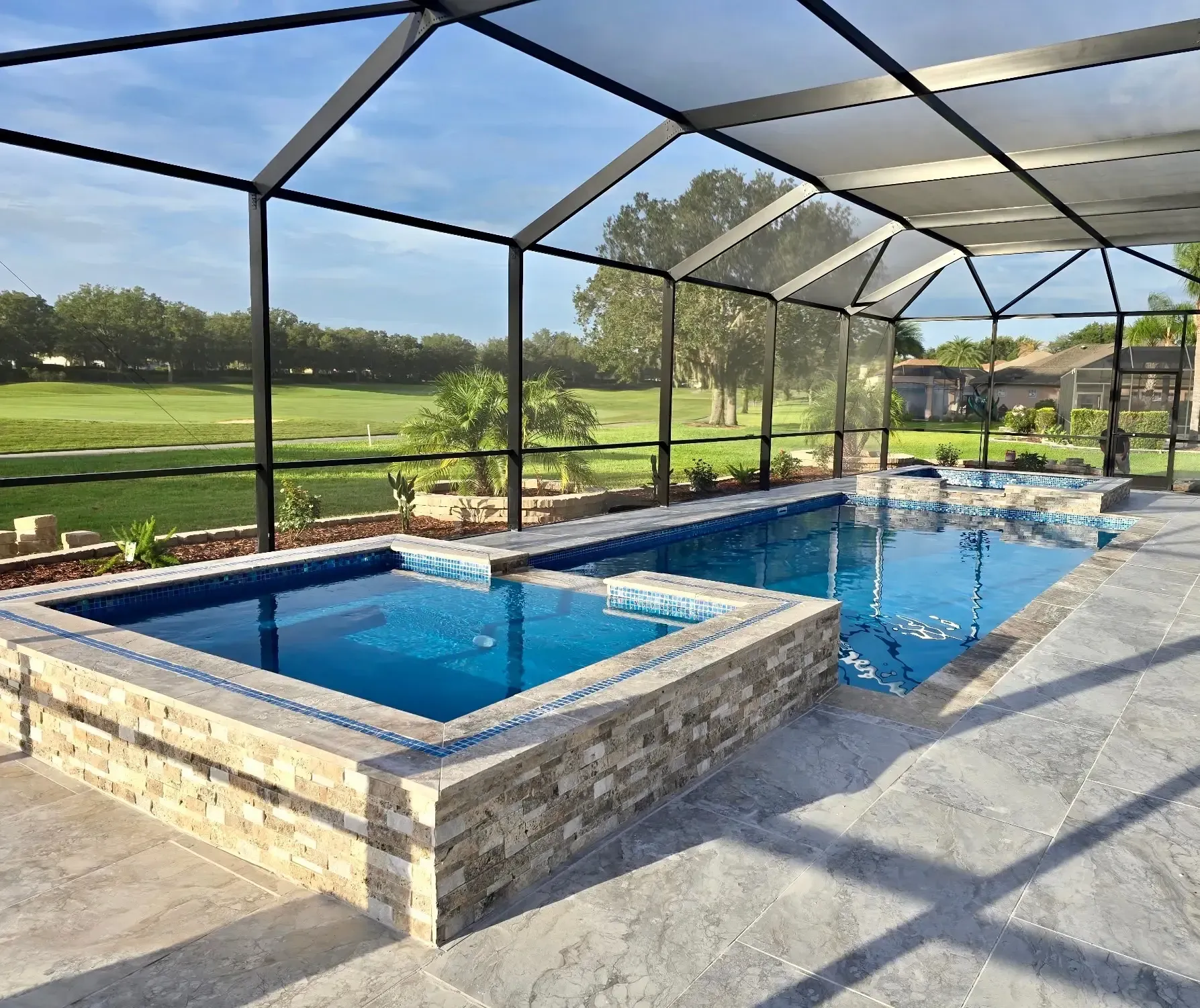
- Your surroundings. A screen enclosure's frame color and lots of green landscaping throw a subtle tint into the water — greenery pushes it toward emerald, open blue sky pushes it bluer. Where your pool sits relative to trees and the cage matters.
None of this is a reason to second-guess yourself into paralysis. It's the reason to look at samples on site , in your actual light, before you commit.
Match the Finish to Your Deck and Enclosure
The finish doesn't live in isolation — it sits inside a whole poolscape. The color that looks great on its own can clash with a warm travertine deck or fight a bronze enclosure frame.
Look at the finish next to the real materials it'll live with:
- Your deck — pavers, travertine, or decorative concrete laid by our in-house licensed mason
- Your screen enclosure frame color — bronze, white, or dark, which reflects into the water
- Your home's exterior — so the whole outdoor living space reads as one design, not three separate decisions
This is the advantage of building the pool, deck, and enclosure with one team: the finish gets chosen as part of the whole picture, not in a vacuum.
Plan Your Finish with Right Way
Choosing the interior finish is one of the best parts of designing a pool — and it's a lot easier with samples in your hand and someone who can tell you how each one behaves in Florida sun and salt water. Right Way brings the samples to you and helps you see the finish against your deck, your enclosure, and your light before anything is set.
We build the pool, the deck, and the enclosure as one project, so the water color you pick is the water color you get.
Call (772) 758-5372 or schedule a consultation at rightwayenclosures.com. One team. One design. One timeline.
Frequently Asked Questions
Will a dark pool finish make the water too hot in the Florida summer?
No. Dark finishes absorb more heat, but the difference is usually only 2–3 degrees. For most Treasure Coast homeowners that's a benefit — it extends the shoulder-season swim window in spring and fall. At the peak of a Florida summer, the difference is rarely enough to make the water uncomfortable.
Does the pool finish color affect how the pool light looks at night?
Yes. Light finishes reflect the LED light and make the whole pool glow brightly. Dark finishes absorb light, so you'll want stronger or additional LEDs to hit the same nighttime brightness. Plan the lighting around the finish during design, not after — it's much easier to place lights before the pour.
How long do pool interior finishes last in Florida?
It depends on the material and your water chemistry. Standard white plaster typically lasts about 7–12 years, colored quartz roughly 15–25 years, and pebble 15–25 years or more. Florida's salt-chlorinated water and hard-water calcium shorten plaster's life fastest, which is why quartz and pebble are the durable picks here.
Does a saltwater system affect which finish I should choose?
It can. Salt-chlorinated water plus normal chemistry is harder on soft plaster over time, causing etching and a shorter lifespan. Quartz and pebble finishes resist that wear far better, so if you're running a saltwater pool — which we recommend and install — they're usually the smarter long-term finish for a Florida build.
Related services: Custom Concrete Pools · Fiberglass Pools · Pavers & Hardscapes
Central and Eastern Coastal Florida trusted experts in custom pool construction, screen enclosures, concrete, pavers, and outdoor kitchens.