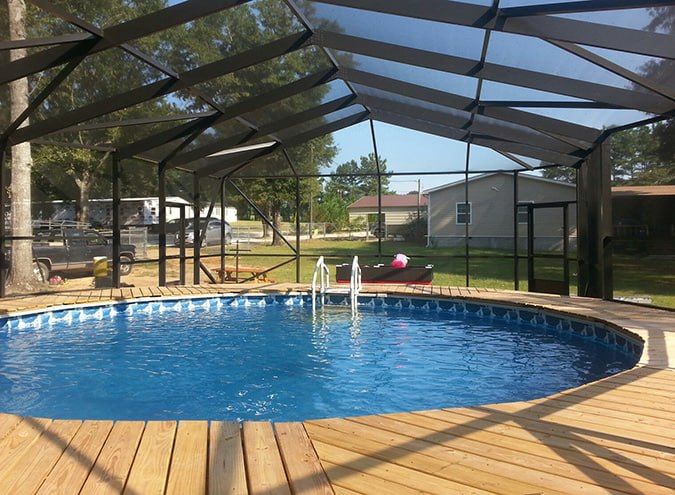
Above Ground Pool HOA Rules in Palm Bay Bayside Lakes
Start Your Transformation
Quick Answer
Whether you need HOA approval for an above ground pool in Palm Bay depends entirely on your neighborhood — not the city. Most of Palm Bay, including large-lot areas like The Compound, has no HOA, so you only answer to the City of Palm Bay Building Division. But deed-restricted communities like Bayside Lakes run an architectural review, and you must submit your plans there before the pool goes in. Either way, you still pull a city permit and meet Florida's 48-inch barrier code.
The One Question That Decides Everything
Before you shop for a pool, answer one question: is your home in a deed-restricted community? That single fact decides whether you're dealing with an HOA board or just the city.
Palm Bay is unusual for Brevard County. Huge stretches of the city — especially the older grid south of Malabar Road and out toward the interior — were platted decades ago with no homeowners association at all . Drop a pool there and no board reviews it.
But newer master-planned pockets are a different story. If you bought in one of those, a private HOA sits between you and your pool. Here's how to tell which side you're on:
- Check your closing documents for a Declaration of Covenants, Conditions & Restrictions (CC&Rs).
- Look for a line item on your monthly or annual statement for HOA or community dues.
- Search your community name against Florida's HOA law, Chapter 720 of the Florida Statutes, which governs how these associations can regulate your property.
- If you pay dues and signed CC&Rs, you have an architectural review to clear. If you don't, you almost certainly don't.
Bayside Lakes and Deed-Restricted Palm Bay
Bayside Lakes, the master-planned community off Bayside Lakes Boulevard in southern Palm Bay, is the neighborhood most people are asking about when they search this. It's deed-restricted, and that means an architectural review committee.
Most established HOAs in Florida do allow above ground pools — but they regulate how it looks from the street and where it sits on the lot. Expect the committee to weigh in on setbacks, screening from neighbors, and whether a deck or enclosure is part of the plan.
The rules vary by community and they change, so we won't invent specifics your board doesn't actually enforce. What we can tell you is the process, which is nearly universal:
- Submit a written Architectural Review Committee (ARC) application with a site plan showing the pool's location and setbacks.
- Include the pool size, deck or paver surround, and any screen enclosure you're adding.
- Wait for written approval before work starts — installing first and asking later is how homeowners end up tearing things out.
- Keep the approval letter; the city may want to see it, and it protects you if a neighbor complains.
The honest catch: HOA review adds time on the front end. A board that meets monthly can add two to four weeks before you're cleared to dig. We build that window into your timeline so nobody's surprised.
The Compound and No-HOA Palm Bay
Then there's The Compound — the large-lot, semi-rural area on the interior side of Palm Bay known for one-acre-plus parcels, room to breathe, and, for most homeowners out there, no HOA telling you what to do with your yard .
If that's you, the good news is simple: there's no board, no ARC application, no waiting on a monthly meeting. Your only gatekeeper is the City of Palm Bay. That's a real advantage for a family that wants the kids swimming this summer without a committee in the way.
Big lots also open up options a tight subdivision can't. On an acre, you've got room for a bigger oval pool, a wide wood or composite deck, and a screen enclosure without crowding a property line. Here's what more space actually buys you:
- Fewer setback headaches — the pool doesn't have to thread between the house and a fence.
- Room for the full pool + deck + screen enclosure bundle instead of a pool crammed into a corner.
- Easier equipment access on install day, which keeps the job moving.
- Space to keep the pool out of sight of the road entirely if you want privacy.
If you're weighing a professional install against a big-box kit you assemble yourself, the tradeoffs are worth reading before you buy — we broke that down in our guide on above ground pools versus big-box DIY.
Central and Eastern Coastal Florida trusted experts in custom pool construction, screen enclosures, concrete, pavers, and outdoor kitchens.
Call Today
(772) 758-5372
City Permit + the Fence Rule Everyone Forgets
HOA or not, every above ground pool in Palm Bay needs a city permit . The City of Palm Bay Building Division reviews the site plan, the electrical, and the barrier before your final inspection. Skipping it is the fastest way to a stop-work order.
The rule that trips people up isn't the permit — it's the barrier. Florida's Residential Swimming Pool Safety Act (Chapter 515, Florida Statutes) and the pool barrier provisions of the Florida Building Code (Section 454) require a safety barrier around the water. The standard most homeowners plan around:
- A barrier at least 48 inches (4 feet) high measured from the outside.
- No gaps that would let a small child slip under or squeeze through.
- Self-closing, self-latching gates that swing away from the pool.
- On some above ground pools, a removable or lockable ladder can serve as part of the approved barrier — the city inspector confirms what qualifies on your specific setup.
This is exactly the kind of detail that separates a licensed local crew from a guy with a pickup. We pull the permit, build to code the first time, and stand there for the inspection. Master-planned communities like the ones profiled in our Viera and Suntree master-planned pool guide run the same review gauntlet — the process travels across Brevard.
📌 Palm Bay Above-Ground Pool Checklist
- HOA? Only if you're in a deed-restricted community like Bayside Lakes — submit ARC plans first.
- No HOA? Most of Palm Bay, including The Compound, answers only to the city.
- City permit: Required everywhere in Palm Bay, HOA or not.
- Barrier: 48-inch code-compliant fence or approved barrier, self-latching gate.
- Install speed: From delivery to first swim in under 7 days once permits are in hand.
What an Above Ground Pool Actually Costs Here
Palm Bay pricing is the same as everywhere else Right Way builds — no neighborhood upcharge, no salt-air premium, no wind-zone adder . What changes the number is the pool size and whether you add a deck or enclosure.
Our all-inclusive above ground packages — pool, pad, engineering, City of Palm Bay permit, electrical, and inspection — run in these ranges:
- Round pools — Size range: 1'' to 33' round; Installed price: $12,200 – $15,800
- Oval pools — Size range: 12'×24' to 18'×39' oval; Installed price: $16,500 – $21,200
- Wood or composite deck add-on — Installed price: $5,000 – $10,000
- Screen enclosure add-on — Installed price: $20,000 – $28,000
Once you add a deck or enclosure, the project can clear $15K, so it's worth knowing you don't have to pay it all up front. Financing is available through Lyon Financial and Foundation Finance Company for qualified homeowners. Every above ground pool we install is resin-coated and saltwater-ready standard — we recommend a saltwater system over chlorine, and both are offered.
Get It Done Right the First Time
Whether you're clearing a Bayside Lakes review board or you've got an acre in The Compound and just want the kids swimming, Right Way handles the whole thing — HOA submittal, City of Palm Bay permit, code-compliant barrier, and the pool itself. One licensed crew, one contract, one timeline across Palm Bay and Brevard County.
No coordinating three contractors, no permit surprises, no half-finished war zone in the yard. We pull the permit, build to code, and hand you a pool.
Call 772-758-5372 or schedule a consultation at rightwayenclosures.com.
One team. One design. One timeline.
FAQs
Does the Bayside Lakes HOA in Palm Bay allow above ground pools?
Yes, in most cases — but you must submit a site plan to the architectural review committee and get written approval before installation. Deed-restricted communities like Bayside Lakes regulate placement, setbacks, and screening under their CC&Rs, which fall under Chapter 720 of the Florida Statutes. Right Way prepares the submittal package for you.
Do you need a permit for an above ground pool in Palm Bay?
Yes. The City of Palm Bay Building Division requires a permit for every above ground pool, whether or not you have an HOA. The permit covers your site plan, electrical bonding, and the safety barrier, and it ends with a final inspection. Right Way pulls the permit and handles the inspection as part of the install.
Can you put an above ground pool in The Compound in Palm Bay?
Yes, and for most homeowners out there, with no HOA to answer to. The Compound's large one-acre-plus lots mean easy setbacks and room for a bigger oval, a deck, and a screen enclosure. You still pull a City of Palm Bay permit and meet the 48-inch barrier code.
How tall does the fence around a Palm Bay above ground pool have to be?
At least 48 inches (4 feet) high. Florida's Residential Swimming Pool Safety Act (Chapter 515) and Florida Building Code Section 454 require a barrier that height with a self-closing, self-latching gate. On some above ground pools a lockable ladder can count toward the barrier — your Palm Bay inspector confirms what qualifies.
Related services: Above-Ground Pool Installation · Pool Screen Enclosures · Paver Installation