Above-Ground Pool vs. Big Box DIY: The Florida Climate Reality Check
Start Your Transformation
Above ground pool costs, permits, and decking in Vero Beach and Indian River County
A big box above-ground pool (Intex, Bestway, Coleman) costs $500–$2,000 upfront and lasts 1–3 seasons in Florida's climate. A professionally installed above-ground pool costs $12,000–$30,000 and lasts 10–15 years. Most Florida homeowners who run the math — and factor in Florida's building code and insurance requirements — find the pro install is cheaper per season.
The Pool That Pays for Itself Twice
Every summer, a few thousand Florida homeowners order a pool kit online — Intex, Bestway, Coleman — and have it up and running within a weekend. The math looks obvious: why pay $12,000–$30,000 for a professional install when you can get swimming for under two grand?
Here is the actual math. A $1,500 Intex pool in Florida's climate lasts, on average, 1–3 seasons before the liner gives out, the resin rails crack under UV exposure, the steel frame surface-rusts through, or the pump fails. You replace it. Another $1,500. Maybe you buy up to a $2,000 model this time. Three seasons later, you're at $4,500–$6,000 spent — and you still don't have a permitted pool, you still don't have an insurable asset, and you still don't have anything that will last another five years.
A professionally installed above-ground pool at $12,000–$30,000 runs $800–$3,000 per year over a 10–15 year lifespan. The math flips. What felt like the expensive option is the cheaper one — measured over time, which is how you should measure a pool.
We're not here to mock anyone's Walmart pool. We're here to show you what Florida specifically does to them that it doesn't do to pools in Ohio or Arizona — and why the engineering reality in this state is different.
What Florida's Sandy Soil Does to a Big Box Pool
Florida's soil is the first problem, and it's one most pool kit instructions don't mention.
Genuine structural above-ground pool installations require level, compacted ground. The site prep matters because an above-ground pool full of water weighs between 80,000 and 120,000 pounds depending on size. That load needs a stable, prepared base — not whatever grade the lawn happens to be at.
Florida's sandy soil presents two specific problems that other states don't have at the same scale:
- Settlement. Sandy soil compresses unevenly under sustained heavy load. A pool that looks level at installation can develop a 2–3 inch tilt within a single season as the ground settles. That tilt puts asymmetric stress on the pool wall, the liner, and every hardware connection — the liner develops folds at the low side, which accelerate wear, and the rails pull unevenly until the pool fails structurally.
- Hydrostatic pressure. Florida's water table is high — in coastal and low-elevation areas, it can sit just a few feet below the surface. When you drain an above-ground pool — to replace the liner, for winterization, or before a storm — the upward pressure from groundwater pushes on the empty shell. A structurally sound professional installation accounts for this. A big box pool sitting on native grade does not: the track warps, the wall separates from the base, and you're looking at a replacement, not a repair.
A Right Way installation starts with site assessment and proper ground preparation. That's not a luxury — it's the engineering minimum for a pool that holds 100,000 pounds of water in Florida's soil conditions.
The Code Problem Nobody Mentions at Checkout
Buying a pool kit on Amazon doesn't make you exempt from Florida's building code. It just means nobody's checked yet.
Florida Statute 515 — the Residential Swimming Pool Safety Act — applies to every pool in the state that holds 24 inches or more of water. That threshold covers every above-ground pool on the market. The law requires a compliant safety barrier (minimum 48-inch height), compliant gate hardware, and — in many configurations — door alarms on any home door that provides direct access to the pool area.
Most big box pool owners are out of code compliance from day one. That creates three exposure points:
- Code violation fines. Brevard, Indian River, and St. Lucie counties all actively enforce Statute 515. Fines typically start around $500 per violation and compound for continued non-compliance.
- Insurance gap. A pool that wasn't permitted is often excluded from homeowner's insurance coverage. If a child is injured in a non-compliant, unpermitted pool, the homeowner can face liability exposure that their policy won't cover — and that risk doesn't show up in the Amazon checkout cart.
- Electrical code violation. The Florida Building Code requires pool pumps and equipment to be permanently wired with bonding and grounding — not plugged into an extension cord. Running a pool pump on an extension cord is a code violation. In a state where afternoon thunderstorms are a daily event from June through September, it's also a genuine safety hazard.
Right Way pulls permits on every above-ground pool installation. That process verifies Statute 515 compliance, electrical hookup, and the safety barrier before the pool is considered done. It's not optional — it's what makes the pool a legal, insurable asset instead of a code liability in your yard. For a full breakdown of what permits are required in your county, see our Brevard County above-ground pool permits guide or ask about Indian River and St. Lucie permitting when you schedule your consultation.
Central & Eastern Coastal Florida trusted experts in custom pool construction, screen enclosures, concrete, pavers, and outdoor kitchens.
Call ☎ 772-758-5372 for premium backyard transformations.
Big Box DIY vs. Right Way: The Full Comparison
Here is the honest side-by-side. Not a promotional one — an engineering one.
| Factor | Big Box DIY (Intex / Bestway / Coleman) | Right Way Professional Install |
|---|---|---|
| Upfront cost | $500–$2,000 | $12,000–$30,000 |
| Florida lifespan | 1–3 seasons | 10–15 years |
| Real cost per season | $500–$2,000 | $800–$3,000 |
| Ground preparation | Customer responsibility — often skipped | Professional leveling and compaction |
| Electrical hookup | Extension cord (FL Building Code violation) | Licensed electrician, bonded & grounded |
| FL Statute 515 compliance | Typically non-compliant — no permit, no inspection | Permitted, inspected, code-compliant |
| Insurance coverage | Often void on unpermitted pools | Permitted build = insurable asset |
| Hydrostatic pressure protection | None — pool warps or floats on FL sandy soil | Installation accounts for FL water table |
📌 The Real Cost Over 10 Years
- ✅ Big Box DIY (3 pools, replace every 3 seasons):$4,500–$6,000 in pool costs + code risk + no insurance + no resale value
- ✅ Right Way Professional Install:$12,000–$30,000 once — permitted, insurable, lasts the decade
- ✅ Break-even point: 4–7 years depending on pool cost and replacement frequency
- ✅ What you can't buy back: the season your family spent in a pool that failed in July
The comparison isn't meant to shame anyone who's tried the big box route. It's meant to give you the math before you spend the first $1,500 — not after you've spent the third.
What a Right Way Install Actually Costs
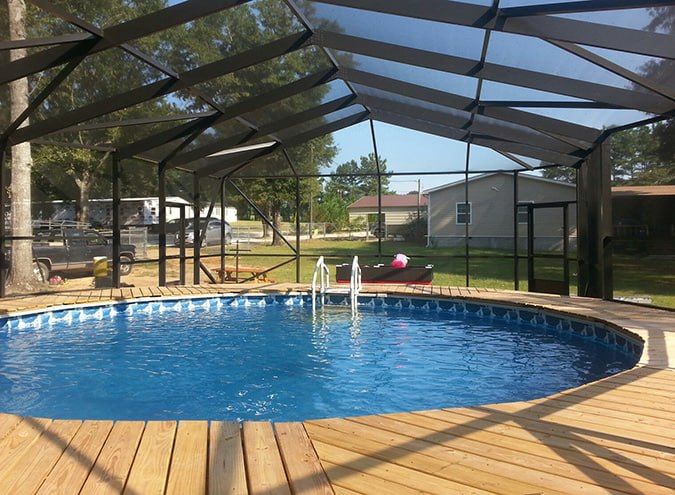
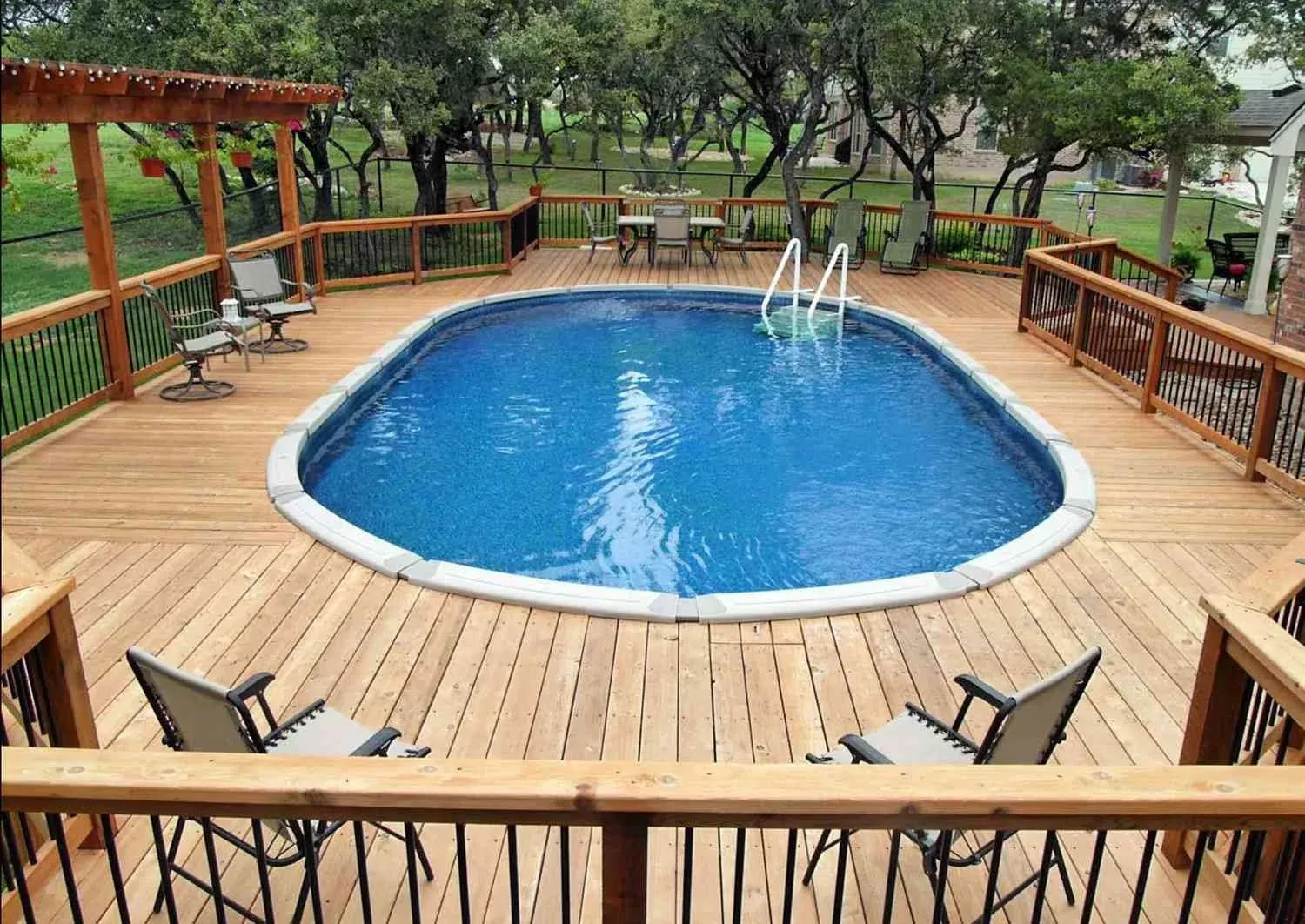
A professional above-ground pool installation from Right Way on the Treasure Coast and Space Coast runs $12,000–$30,000 depending on pool size, site conditions, and whether you're adding a paver deck or screen enclosure.
Here's what that price includes that the kit price doesn't:
- Site leveling and ground compaction
- Licensed electrician hookup with bonding and grounding
- Permit pulling and inspection coordination for your county
- Stainless steel hardware throughout — not galvanized, not zinc-coated
- Installation by an in-house Right Way crew, not a subcontractor
The pool-only install is the entry point. Families who add a paver deck move into the $18,000–$40,000 range. Adding a screen enclosure — which extends the swim season, blocks bugs, and cuts the UV exposure that breaks down liner and furniture — moves the package to $35,000–$65,000. Financing is available through Lyon Financial and Foundation Finance Company for qualified homeowners.
Get the Install That Lasts
The Treasure Coast and Space Coast aren't forgiving environments for shortcuts. Florida's soil, building code, hurricane season, and UV index all work against the big box pool kit. The engineering reality — not the sales pitch — is that a professional install is the cheaper, safer, and more permanent solution.
Right Way pulls the permits, does the site prep, and uses hardware that lasts in this environment. Call 772-758-5372 or schedule at rightwayenclosures.com. One team. One design. One timeline.
Frequently Asked Questions
Q1: How long does a big box above-ground pool (Intex, Bestway) last in Florida?
A1: Most big box pool kits — Intex, Bestway, Coleman, and similar brands sold at Walmart, Costco, or Amazon — last 1–3 seasons in Florida's climate. The combination of UV intensity, high humidity, sandy soil settling, and Florida's hurricane season significantly shortens the lifespan compared to the same pool used in a northern state. Liner failure, UV-cracked resin rails, and surface-rusted steel frames are the most common failure points.
Q2: Is a big box above-ground pool legal in Florida without a permit?
A2: Not typically. Florida Statute 515 requires safety barrier compliance for any pool holding 24 inches or more of water — which includes every above-ground pool on the market. The statute covers barrier height (minimum 48 inches), gate hardware, and door alarms. Additionally, Florida Building Code requires pool equipment to be permanently wired, not run on extension cords. Most big box pools are installed without permits, making them non-compliant from day one. Homeowners face fines starting around $500 per violation and potential insurance coverage gaps.
Q3: What does a professional above-ground pool installation cost compared to a big box kit in Florida?
A3: A big box kit costs $500–$2,000 upfront but typically needs replacement every 1–3 seasons in Florida, making the real 10-year cost $4,500–$6,000 or more. A professional Right Way installation costs $12,000–$30,000 upfront and lasts 10–15 years — roughly $800–$3,000 per year. When you factor in permitted status, insurance coverage, proper site preparation, and hardware that holds up in Florida's climate, most homeowners find the professional install is the better financial decision after year 4–7.
Brevard, Indian River & St. Lucie's trusted experts in custom pool construction, screen enclosures, concrete, pavers, and outdoor kitchens.
Call ☎ 772-758-5372 for premium backyard transformations.
Related reading: Brevard County Above-Ground Pool Permits 2026 · Above-Ground Pool Costs, Permits & Decking in Vero Beach
Related services: Custom Pool Construction · Above-Ground Pools · Screen Enclosures